
The conference is at Valley Forge. The dinner is in Philadelphia. Between those two facts sits a 22-mile highway transfer, a group of 40 people who've been in sessions since 8 AM, and a reservation that starts at 7:30 PM.
This is one of the most common two-location logistics problems in the corporate events calendar, and the planning for it consistently happens too late. The Schuylkill Expressway westbound at 5 PM is not the same road as the Schuylkill Expressway at 2 PM. By the time that distinction matters, the vehicles are either booked or they're not.
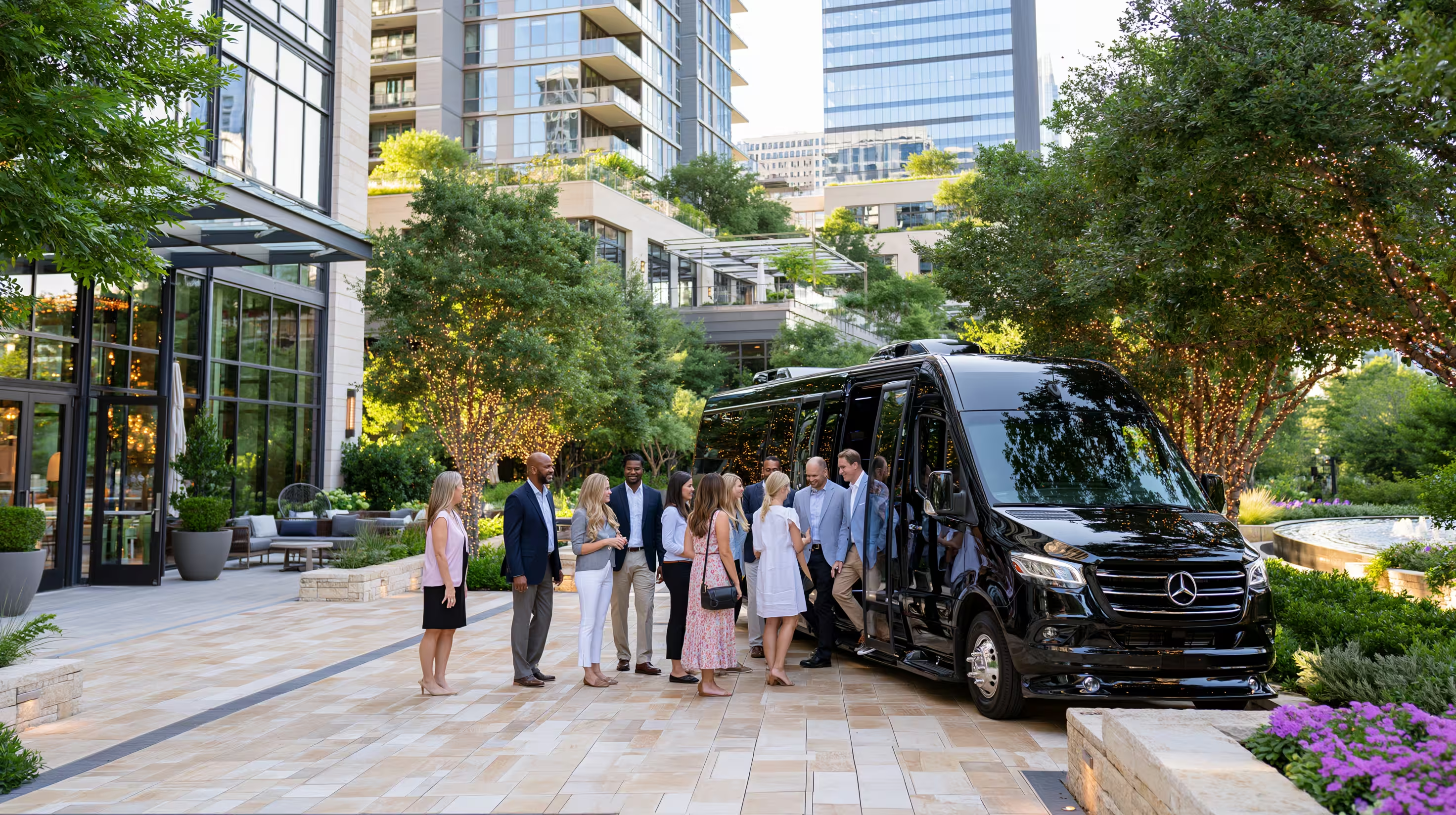
Why the Valley Forge–Philadelphia Corridor Is a Distinct Logistics Problem
Most conference group transportation operates within a single geography — airport to hotel, hotel to venue, venue back to hotel. The Valley Forge corporate conference introduces a different structure: a primary venue 22 miles outside Philadelphia, an evening program inside the city, and a return transfer that needs to be coordinated after dinner without leaving half the group at a restaurant waiting for vehicles that didn't stage correctly.
The I-76 Schuylkill Expressway is the connecting tissue. It's fast in the morning and the midday hours, unreliable from mid-afternoon through early evening, and completely predictable in its unpredictability. A group departure from Valley Forge at 5:30 PM headed to Center City Philadelphia should budget 50 to 70 minutes. The same departure at 2 PM takes 35. The event planner who books the vehicle for a 6 PM Philadelphia arrival and schedules the Valley Forge departure at 5:45 PM has not built in the Schuylkill variable.
This is the core reason group transportation on this corridor requires earlier departure scheduling than intuition suggests — and why the vehicle and driver briefing should include the specific timing logic, not just the origin and destination.
Charter Bus vs. Sprinter Van: The Group Size Question
For a conference group of 40 to 50 people moving together between Valley Forge and Philadelphia, a charter motorcoach is the capacity-appropriate solution. A Mid-Sized Motorcoach handles 35 passengers; an Executive Coach covers up to 56. One vehicle, one driver, one departure time, one arrival sequence. For a large conference dinner where the group is a single unit and the destination is a private dining room or buyout restaurant, the motorcoach eliminates the coordination problem entirely.
The trade-off is scheduling rigidity. A motorcoach departure requires a fixed time, a specific loading sequence, and a driver who knows when the group is expected to board. If the afternoon session runs 25 minutes long — which conference sessions regularly do — the motorcoach departure either waits (creating downstream timing pressure) or departs without the stragglers (creating a worse problem). For a group that needs flexibility in its departure window, the motorcoach's efficiency becomes a constraint.
Sprinter Vans handle 10 to 12 passengers and operate well in coordinated pairs or triplets for mid-sized groups of 20 to 35. The advantage over a single large vehicle is departure flexibility: two Sprinter Vans can leave in sequence as subgroups of the conference finish the afternoon session, rather than waiting for the full group to assemble. The first 12 people ready to depart take the first van; the remaining 20 follow in the next two within 20 minutes. The early arrivals are already at the Philadelphia restaurant when the last van pulls in.
For a group using Philadelphia Sprinter van transportation, the staggered departure model often fits corporate conference reality better than the all-at-once motorcoach model, particularly when the afternoon program has a soft rather than a hard end time.
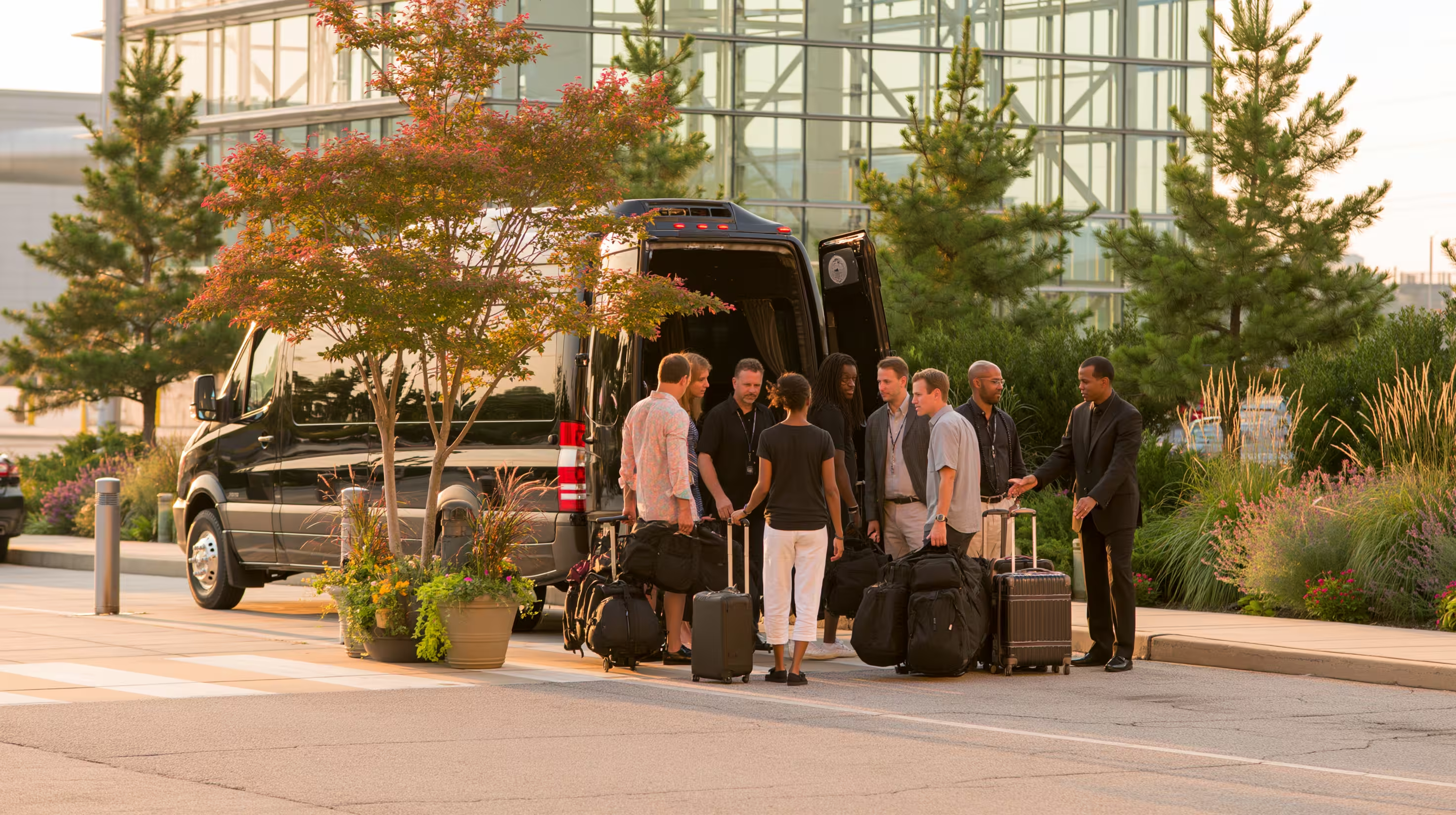
Hourly Service for the Evening Program: Flexibility as Infrastructure
The return transfer from Philadelphia to Valley Forge after dinner is where single-booking logistics most commonly fail. Dinner ends at 10 PM — or 10:45 PM, or 11:15 PM, depending on how the evening develops. The vehicles that were booked for a 10 PM pickup are either sitting in a no-parking zone at 9:30 PM or have been released and need to be rebooked.
Hourly service with a known provider solves this. The vehicles are on-call for the evening program's duration rather than staged for a specific pickup time. When the dinner wraps, the driver is notified, the group loads, and the Schuylkill eastbound return to Valley Forge — which runs cleanly after 10 PM — takes 30 minutes.
The hourly model also accommodates the subset of the group that wants to extend the evening in Philadelphia. Not everyone returns to the hotel at the same time. An hourly arrangement with multiple vehicles allows one to depart with the main group at 10 PM and another to stay for the guests who continue at a second location — without rebooking a separate transfer that may or may not be available at 11:30 PM in a busy Philadelphia corridor.
For a conference group with a published dinner program and a likely informal extension, building the vehicle arrangement around flexibility rather than a fixed schedule is the professional approach.
Conference and Event Calendar: Demand Timing
The Valley Forge Convention Center hosts pharmaceutical, healthcare, financial services, and technology conferences throughout the year — a recurring calendar of events that creates predictable transportation demand peaks in the King Prussia corridor. When a large pharma conference draws 500 attendees to Valley Forge for three days, every conference transportation coordinator in the group is competing for the same Sprinter Vans and motorcoaches.
The Philadelphia side of the equation adds its own event calendar pressure. The MLB All-Star Game and PGA Championship at Aronimink both draw significant group transportation demand that compresses the available fleet across the PHL and Philadelphia corridor simultaneously. A corporate conference that overlaps with a major Philadelphia sporting event is planning both the Valley Forge sessions and the Philadelphia evening program against a tighter-than-normal vehicle supply.
Due to traffic restrictions and elevated demand during major events, a minimum hourly booking requirement may apply. Minimums vary by event, vehicle class, and city — confirming group transportation availability and minimum requirements well before the conference dates is the right sequence. For a conference with a fixed date, the vehicle booking should happen at the same time as the venue and catering contracts.

Airport Arrivals: Connecting the First Leg to the Conference
Most Valley Forge conference groups begin at PHL. The PHL airport transfer to the Valley Forge corridor covers the arrival leg — whether that's individual SUV pickups for staggered arrivals delivering to the Sheraton, or a coordinated motorcoach for a large group flying in together.
The PHL to Sheraton Valley Forge route and the broader Philadelphia car service cover both the arrival leg and the multi-day event transportation picture.
For conference groups where some members drive from New York rather than flying, the NYC to Philadelphia car service addresses that leg specifically — relevant for tri-state area attendees who prefer a driven transfer to either a flight or self-driving on the New Jersey Turnpike.
For full group transportation planning across the Valley Forge–Philadelphia corridor, the vehicle options by group size, motorcoach vs Sprinter Van configuration, and hourly vs point-to-point arrangements are all available to discuss and confirm well before the event date.
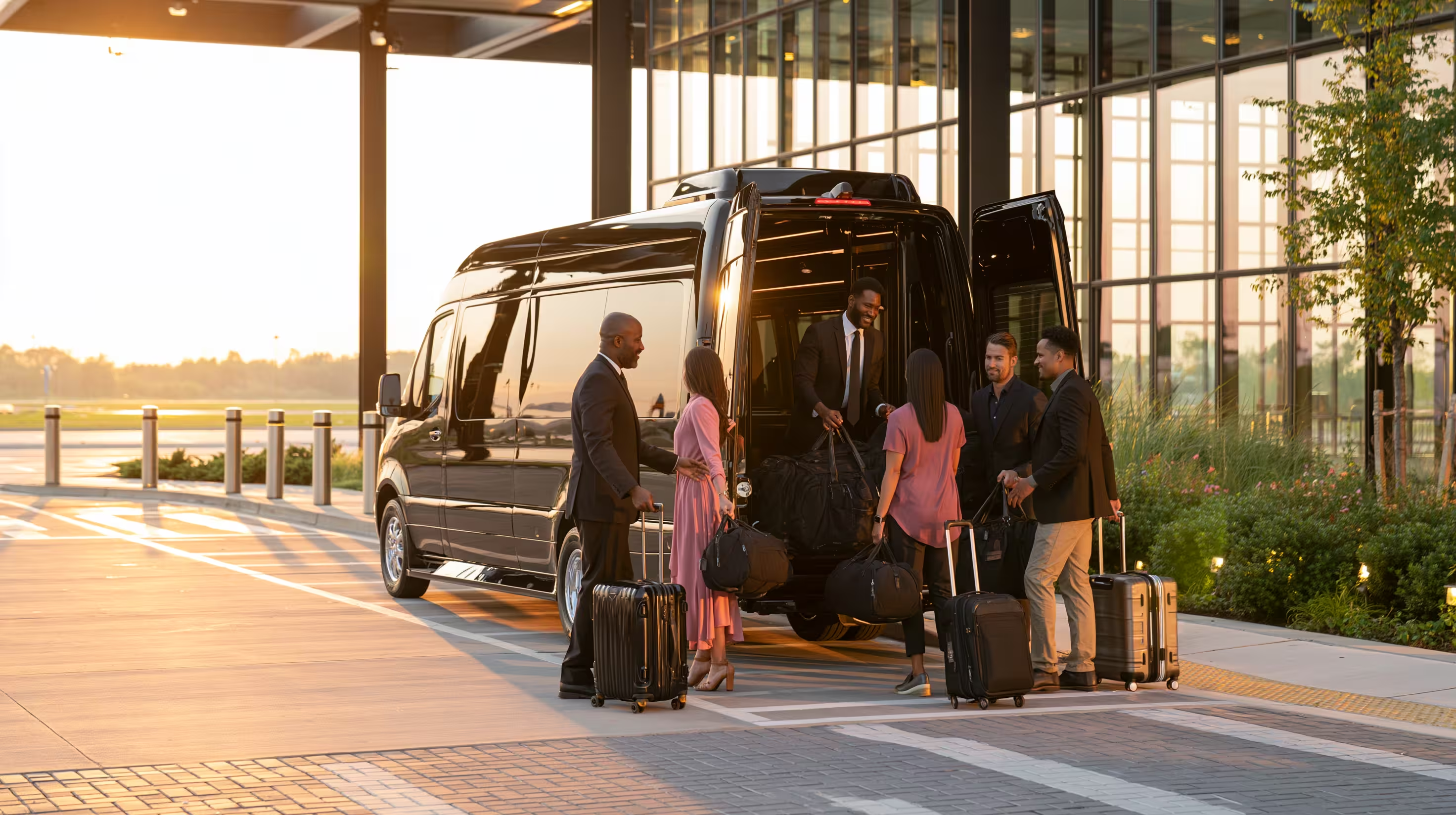
The Conference Day Needs a Transportation Plan, Not a Backup Plan
The most common Valley Forge conference transportation failure isn't a vehicle that doesn't show — it's a plan that assumed the Schuylkill at 5:30 PM would cooperate, or a dinner departure time that didn't account for a session running long, or a return transfer that was booked for a specific pickup time and couldn't flex when the evening extended.
The vehicle plan for a conference day in Valley Forge with a Philadelphia evening program is simple when it's built in advance: outbound motorcoach or staggered Sprinter Vans from the conference venue, hourly evening program vehicles in Philadelphia, and a return transfer staged for a window rather than a fixed minute. Three decisions, made early, that hold the day together regardless of what the conference schedule actually does.
John Doe