
A group day in Fort Worth rarely involves two stops. It starts at the hotel, moves to a lunch spot in the Near Southside, continues to a meeting or venue in the Cultural District, then connects to a dinner reservation back toward the Stockyards before the evening wraps somewhere on West 7th. That's five locations, four transfers, and a timeline that shifts by 30 minutes at some point in the middle.
Point-to-point bookings don't absorb that kind of day. Hourly service does.

Why Fort Worth Is a Multi-Stop City
Fort Worth's neighborhoods don't cluster the way a downtown-centric city does. The Stockyards District, the Cultural District, West 7th, the Near Southside, and downtown Fort Worth are each 10 to 20 minutes apart by car — close enough to feel connected on a map, far enough that each leg requires a vehicle decision.
A group staying at Hotel Drover in the Stockyards doesn't walk to the Modern Art Museum or the Fort Worth Convention Center. They don't walk to a Near Southside lunch restaurant or a West 7th dinner spot. Every move requires a vehicle, and for a group of eight to twelve, coordinating those moves across a full day on individual rideshare requests is a reliability problem waiting to happen — particularly when the group needs to arrive together, on time, at a venue that has a reservation or a scheduled start.
Hourly group transportation solves this by keeping a vehicle and driver available for the duration. The group doesn't re-book between stops. They don't wait for surge pricing to reset. The driver knows the full day's itinerary and manages the timing from the hotel lobby onward.
Hourly vs. Point-to-Point: The Trade-Off Is Straightforward
Point-to-point booking makes sense when the group has exactly one origin and one destination, the timing is fixed, and there are no intermediate stops. Airport to hotel. Hotel to airport. A single dinner transfer when everyone is traveling back to the same place afterward.
A Fort Worth corporate day or group event itinerary almost never fits that structure. Consider a typical pattern: morning pickup from Hotel Drover to a meeting space downtown, post-meeting lunch at a Magnolia Avenue restaurant, afternoon at a conference venue in the Cultural District, cocktail hour at a West 7th rooftop, dinner in the Stockyards. Five legs. The group doesn't want to re-book a vehicle between each one, and the timeline between stops is subject to the meeting running long, the lunch extending, or the afternoon session breaking early.
With hourly service, the driver is present throughout. The group finishes the meeting and tells the driver they're ready — no app, no wait, no explaining the next destination to a new driver each time. The vehicle adapts to the actual day rather than the planned version of it.
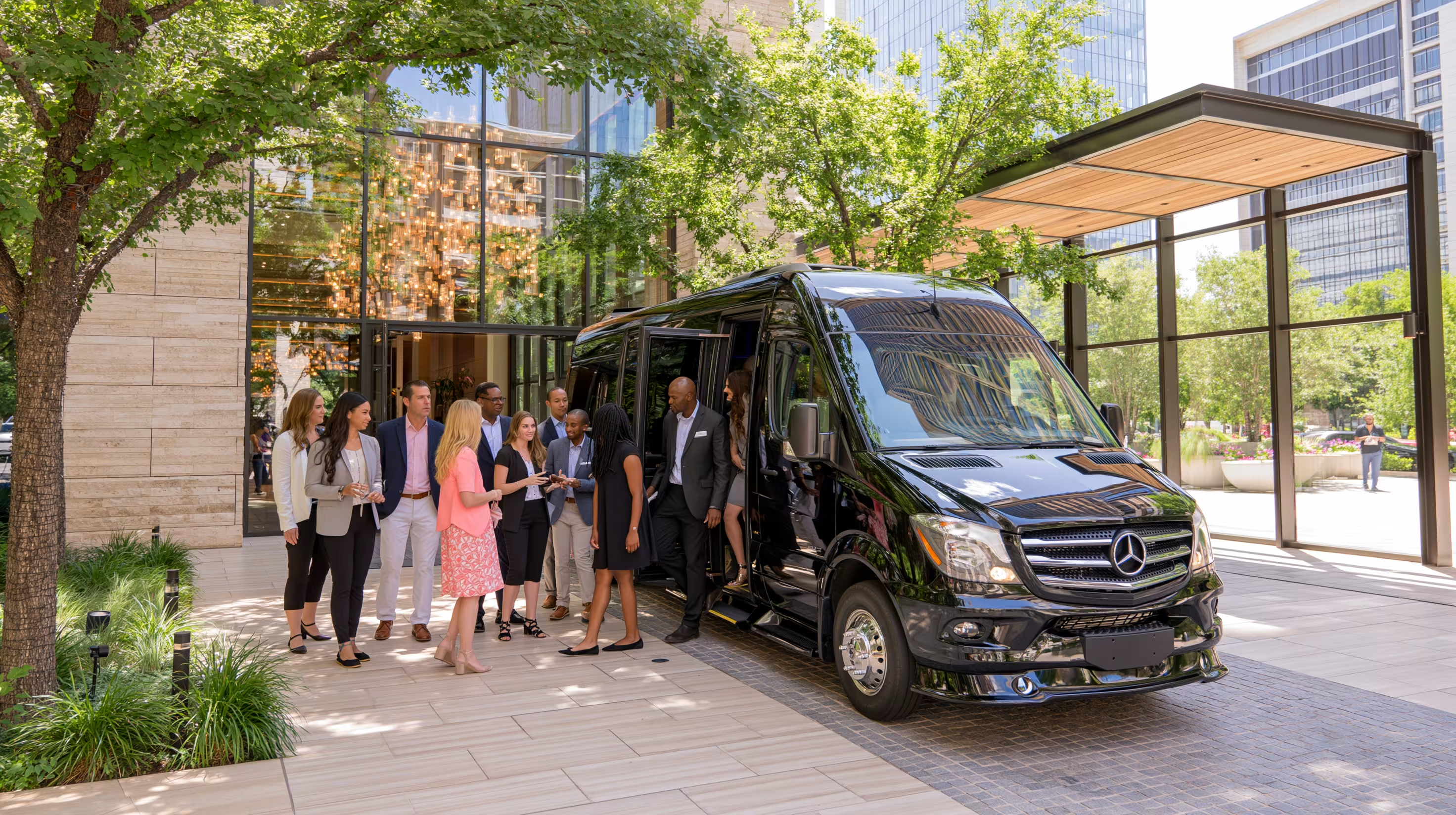
For eight to twelve people, a Sprinter Van on an hourly booking keeps the whole group moving together. No splitting the itinerary between vehicles. No half the group arriving at the dinner reservation ahead of the other half. One vehicle, one driver, one timeline that the whole group shares.
Sprinter Van for 8–12: Why Group Size Changes the Calculation
Below six people, a Premium SUV handles group transportation cleanly — particularly for a shorter itinerary with two or three stops. Above eight, the SUV math stops working. Two SUVs for ten people creates the split-group problem on every leg: two vehicles, two drivers, two separate timelines that diverge slightly at each stop and require re-coordination at every destination.
A Sprinter Van holds up to twelve passengers with luggage and operates as a single unit. For a corporate group or a delegated team moving through Fort Worth on a structured day, that unity has functional value beyond comfort. The pre-meeting conversation happens in the van. The debrief happens in the van. The group arrives at each venue as a group, not as two waves of five people separated by four minutes and a parking situation.
The Sprinter also handles Fort Worth's narrower historic street areas — Mule Alley in the Stockyards, sections of Magnolia Avenue — without the footprint issues that a larger motorcoach would create. It's the right scale for a city day with an active itinerary.
Fort Worth Rodeo and Event Days: Planning the Group Itinerary Around It
The Fort Worth Stock Show & Rodeo transforms the Stockyards corridor each January and February. Foot traffic on Exchange Avenue and Mule Alley increases significantly; road access to and from Hotel Drover requires more navigational flexibility; and venues across the city fill with Rodeo-adjacent events and corporate entertainment.
For a group whose Fort Worth visit overlaps with the Rodeo — or with any major event at Dickies Arena, the Fort Worth Convention Center, or the Cultural District venues covered in the top Dallas-Fort Worth event guide — the itinerary planning needs to account for elevated road activity around key venues and neighborhoods. An experienced driver on an hourly booking adjusts routing as the day develops; a point-to-point booking made hours earlier doesn't have that flexibility built in.
Due to traffic restrictions and elevated demand during major events, a minimum hourly booking requirement may apply. Minimums vary by event, vehicle class, and city — confirming availability and minimum requirements before finalizing the reservation is the right step, particularly for any group visit tied to a specific Fort Worth event date.
For a corporate offsite or delegated group trip where the itinerary is still being finalized, locking in the vehicle and the date is the priority. The specific stops can be confirmed closer to the visit.
The Airport Leg: DFW to the Stockyards Before the Day Starts
Most group Fort Worth visits start at DFW, not at the hotel. The transfer from DFW to Hotel Drover in the Stockyards District is 25 to 35 minutes under normal conditions — a Sprinter Van handles that leg cleanly for a group arriving on the same flight or within a tight arrival window.
When the group is spread across multiple flights, the airport leg requires a different approach: individual or paired SUV pickups timed to each arrival cluster, delivering to the hotel, and transitioning to hourly group service once everyone has assembled. The DFW airport transfer page and the DFW to Hotel Drover route cover the airport leg specifics and vehicle options.
The handoff between the airport transfer and the group day vehicle is the moment that either works or requires real-time problem-solving. Planning both legs through the same provider means one conversation covers both, and the transition at the hotel is a briefing rather than a rebooking.
Building the Day Around the Vehicle, Not the Other Way Around
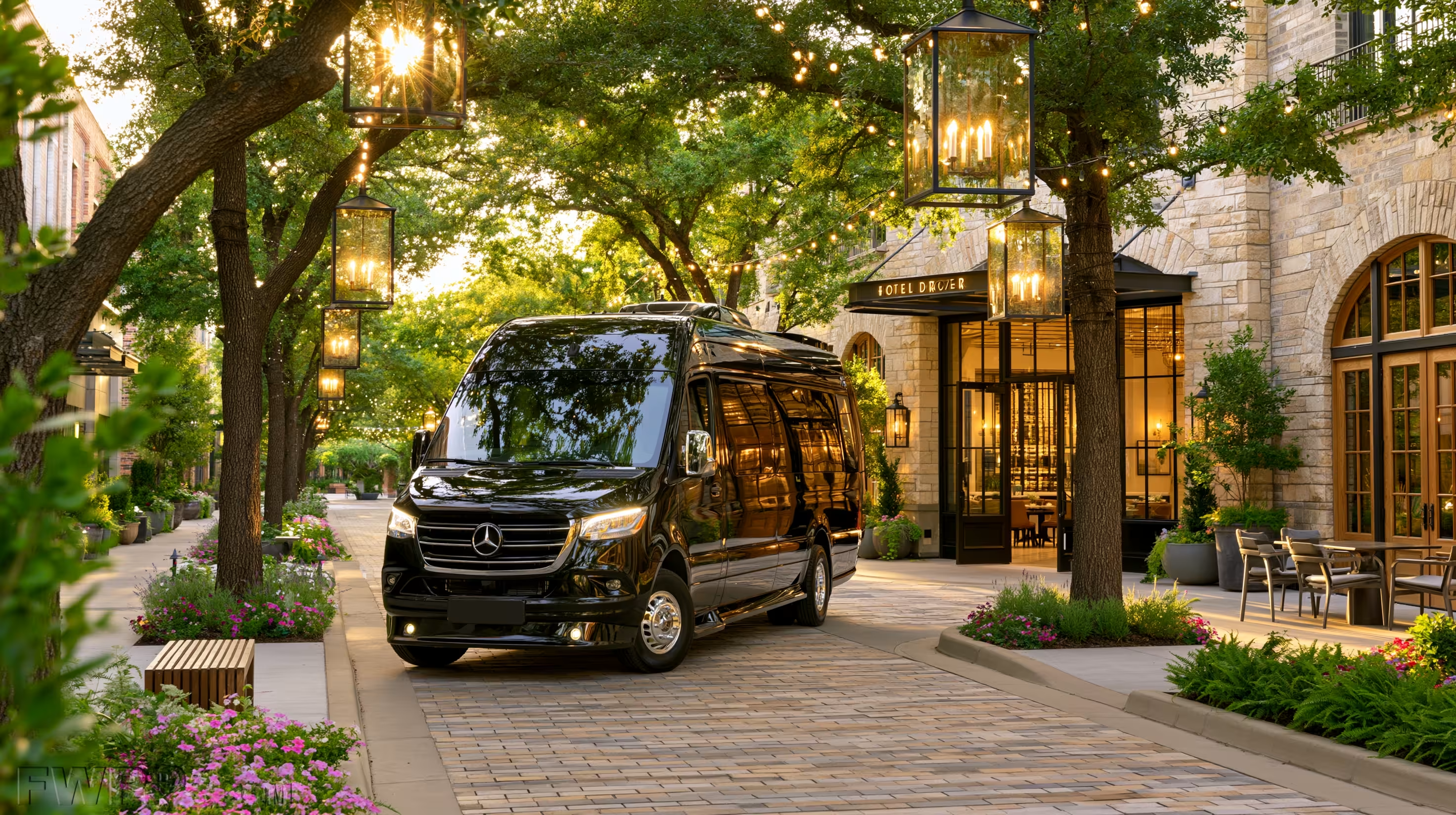
The most efficient Fort Worth group days are built with the vehicle in mind from the start — not retrofitted after the itinerary is set. When the group knows they have a Sprinter Van from 10 AM to 9 PM, the schedule has a fixed backbone. Stops can shift. Timing can flex. The vehicle and driver are the constant that holds everything else together.
For a group operating out of Hotel Drover with a full Fort Worth day ahead, the logistics of that day are simpler than they look — as long as the vehicle is confirmed before the agenda is distributed.
John Doe