
Austin's neighborhoods are close enough to feel connected and far enough apart that moving a group between them without a dedicated vehicle creates friction at every transition. Rainey Street to East Austin is a seven-minute ride in a car. It's a 20-minute wait for a rideshare when the group is ready to leave and the area is busy. For a group of eight to twelve people, that friction compounds across every stop in the day.
Hourly service with a Sprinter Van eliminates the wait. The vehicle is present. The group moves when the group is ready.

Why Austin Is a Multi-Stop City for Groups
Austin's entertainment and dining geography is distributed across distinct neighborhoods that don't consolidate the way a single downtown strip would. A group staying at Austin Proper in the Second Street District has the convention center nearby, but 6th Street is a walk east, Rainey Street is a walk southeast, and East Austin — home to some of the city's most relevant bars and restaurants for a younger corporate crowd — is a 10-minute drive across I-35.
A full group day in Austin rarely involves fewer than four stops. A morning session at a conference venue, lunch in the Warehouse District, an afternoon activation on Rainey Street, dinner in East Austin, and a late stop on 6th Street is a typical itinerary for a corporate team or a SXSW delegation. Each of those legs requires a vehicle decision. For a group of ten, making that decision five times on an ad-hoc basis is a day management problem that gets worse as the itinerary runs longer.
Hourly service locks in the vehicle and driver for the day's duration. The group's itinerary is shared with the driver at the start; stops adjust as the day develops; nobody re-books between legs or explains the next destination to a new driver. The vehicle is the constant that holds the day together.
Hourly vs. Point-to-Point in Austin: The Specific Trade-Off
Point-to-point booking works for a group with one origin, one destination, and a fixed timeline. The airport transfer to the hotel at the start of the trip. The hotel-to-airport run at the end. Any leg where the group leaves one place and goes directly to one other place with no intermediate flexibility.
An Austin group day doesn't fit that structure. The lunch reservation shifts from 12:30 to 1:15 because the morning session runs long. The Rainey Street stop extends an hour because two people want to stay and two want to move on. The East Austin dinner ends earlier than expected and the group wants to add a stop before returning to the hotel.
Point-to-point bookings made hours in advance don't absorb any of that. Each change requires a new booking, a new wait window, and a new driver who doesn't know the group's timeline. Hourly service with a known driver means the group lead communicates one update — "we're ready in 20 minutes" — and the vehicle is there.
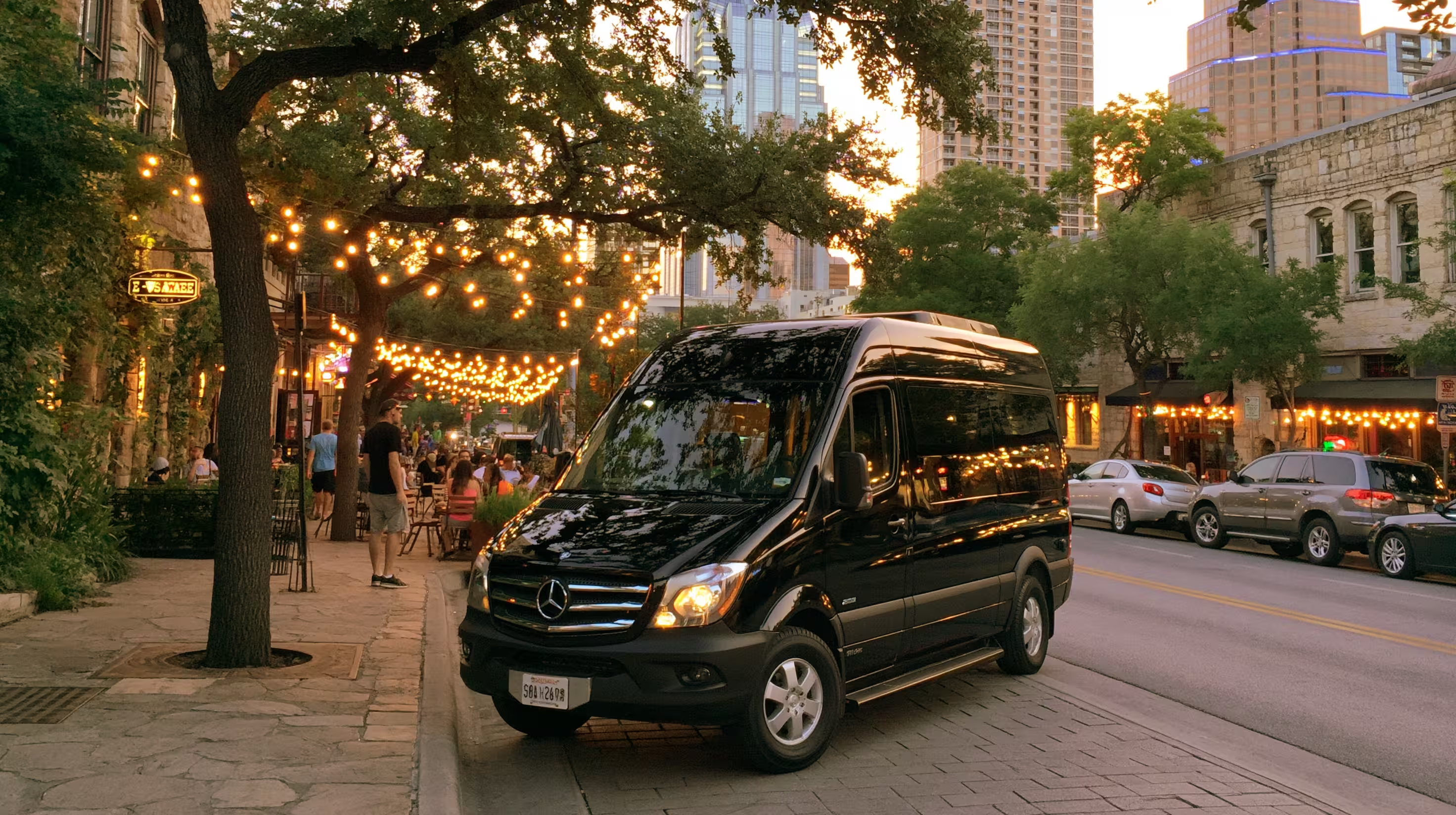
For groups using Sprinter van transportation in Austin, the hourly model also prevents the repeated vehicle-sizing problem. The same Sprinter that handled the morning session handles the Rainey Street stop and the East Austin dinner without rebooking a different vehicle class between stops.
Sprinter Van for 8–12: The Group Integrity Argument
For groups below six, two SUVs can cover the day without significant coordination overhead. Above eight, splitting the group across multiple vehicles creates a structural problem: two vehicles don't arrive simultaneously, the group fragments socially and operationally, and every stop requires a re-consolidation that takes longer than it should.
A Sprinter Van holds up to twelve passengers and operates as one unit across the full Austin itinerary. The pre-dinner conversation happens in the van. The debrief from the afternoon session happens in the van. The group arrives at 6th Street together rather than in two waves that have to find each other in a crowded bar.
Austin's neighborhoods also have varying vehicle access conditions depending on the time of day. 6th Street closes to vehicular traffic on weekend evenings and during events. Rainey Street gets compressed when the bars are operating at capacity. East Austin's main corridors — East 6th, Cesar Chavez — have their own access patterns during events. A Sprinter Van operating with an experienced Austin driver navigates these conditions without putting the group on the sidewalk trying to figure out where to reassemble.
For the SXSW or ACL week version of this itinerary, the access restrictions multiply. Blocks that are accessible on a regular Tuesday are festival infrastructure zones on a SXSW Friday. The SXSW Austin transportation guide and the SXSW transportation page cover how group movement works differently during the festival — including which neighborhood approaches remain viable and which require routing adjustments.
SXSW and ACL: When Group Day Logistics Get Complicated
SXSW turns Austin's downtown into a venue grid. Stages, badge-scanner lines, wristband events, and brand activations occupy blocks that are empty street during any other month. A group moving between conference sessions, day parties, and evening showcases is navigating a city that has reorganized itself around a festival footprint.
The group logistics problem is the same as any Austin day but amplified: more stops, more timing uncertainty, more access restrictions per block. Hourly service with a Sprinter Van is the right infrastructure for a SXSW delegation precisely because the day's itinerary is the least predictable it will ever be. The vehicle adapts to what the day actually becomes rather than what it was planned to be at 8 AM.
ACL Festival in Zilker Park creates a more geographically concentrated version of the same problem. South Austin access during ACL weekend requires routing flexibility that a fixed point-to-point booking simply doesn't provide.
Due to traffic restrictions and elevated demand during major events, a minimum hourly booking requirement may apply. Minimums vary by event, vehicle class, and city — confirming availability and requirements before finalizing any SXSW or ACL-period reservation is the necessary first step. Sprinter Vans at the right capacity are committed weeks ahead of both events.

Airport Transfers and the Group Day: Connecting the Legs
The group day in downtown Austin typically starts at AUS. The AUS airport transfer covers the arrival leg — whether that's a Sprinter Van handling a group that landed on the same flight, or individual SUV pickups for staggered arrivals delivering to Austin Proper and transitioning to group service once everyone has assembled.
The connection between the airport leg and the hourly group day works cleanest when both are booked through the same provider. The driver briefed on the group's full-day itinerary from the start handles the airport arrival as the first stop, not as a separate transaction. The AUS to Austin Proper route and the Austin car service overview cover the full picture from first arrival to last drop-off.
The Day Runs Better With One Vehicle
The most effective Austin group days have one vehicle present throughout. Not because it's logistically mandatory — it's possible to piece together a day with individual transfers — but because the group's time and energy are the resource worth protecting. Every transition that requires re-booking, waiting, or splitting is time and attention that would otherwise go toward the reason the group is in Austin in the first place.
A Sprinter Van on hourly service for a full Austin group day isn't a luxury decision. It's the operational backbone that makes the rest of the itinerary possible.
John Doe