
Most visitors flying into Philadelphia are going to Philadelphia. The hotel is near City Hall, the convention center is downtown, and the car from the airport drops them at a Center City address. The routing is well-understood, the distance is manageable, and the options are clear.
The visitor heading to Valley Forge or King Prussia is doing something different. The destination is 22 miles northwest of PHL — past the city, past the suburbs, into the Main Line corridor where the highway that connects everything is one of the most temperamental roads in the region.
The Schuylkill Expressway: Understanding the Variable Before You Land
The I-76 Schuylkill Expressway is the primary route between Philadelphia International Airport and the Valley Forge area. It's also a highway that Philadelphia-area drivers treat with specific caution, and for good reason.
The Schuylkill runs through a narrow corridor with limited shoulder space, aging infrastructure, and a traffic pattern that backs up unpredictably. A single accident between the airport and the King of Prussia interchange can add 45 minutes to a 25-minute drive with essentially no alternate route that doesn't involve significant surface street detours. During rush hours — which in the Philadelphia suburbs begin earlier and end later than most people plan for — the westbound approach from the airport toward Valley Forge slows to a crawl between the I-476 interchange and the Route 202 exit.
In off-peak conditions, the drive from PHL to the Sheraton Valley Forge in King Prussia runs 25 to 35 minutes. Between 4 PM and 6:30 PM on weekdays, budget 50 to 70. On a Friday before a holiday weekend, the Schuylkill westbound can add well over an hour.
A driver who does this route regularly has a feel for when to commit to the Schuylkill and when to route through surface streets — Route 30 (the Lancaster Pike), or a combination of I-95 and local roads — to bypass the worst sections. That judgment is not something a navigation app makes reliably; it requires knowing this specific road in real-time conditions. The PHL airport car service covers this corridor as a core route, not an edge case.
Main Line Suburbs vs. Center City: Why the Drop-Off Logic Differs
Philadelphia's Center City is a compact, walkable urban grid. The airport transfer to a downtown hotel involves standard urban drop-off logistics — the hotel has a pull-in or a loading zone, the block is familiar, and the sequence is straightforward.
The Valley Forge and King Prussia corridor is suburban highway infrastructure. The Sheraton Valley Forge sits off North Gulph Road, accessed from Route 202 or the Valley Forge interchange — a sequence that involves highway exits, traffic light sequences, and a final approach that works best when the driver knows the specific driveway rather than navigating by address. For a corporate guest arriving for the first time, the difference between a driver who knows this property and one who's following GPS instructions at an unfamiliar interchange becomes apparent in the last two minutes of the ride.
The broader Main Line — Radnor, Wayne, Berwyn, Malvern — has similar characteristics. These are not downtown drop-offs. Each property has its own access logic, and the surface road network connecting them is less intuitive than a city grid. A Philadelphia-area car service operating regularly in this corridor knows the difference.
Sedan vs. SUV for Conference Arrivals
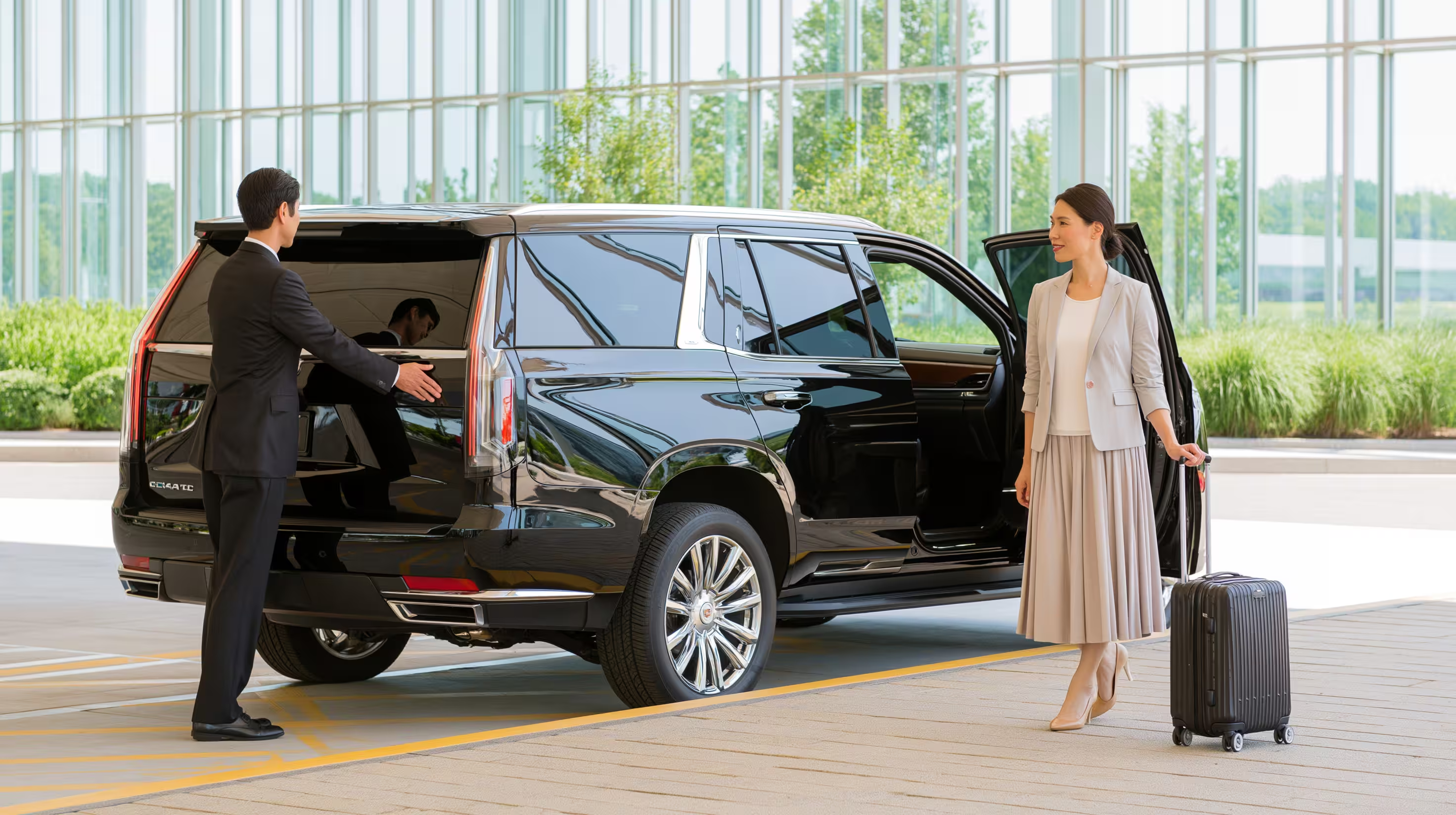
Valley Forge's primary draw for business travel is the conference market. The Valley Forge Convention Center and the surrounding hotel complex host pharmaceutical industry meetings, healthcare conferences, financial services gatherings, and corporate retreats throughout the year. The typical attendee arrives with more luggage than a one-night trip — a full rolling bag, a garment bag for formal dinner events, a laptop case, and often printed materials or samples depending on the industry.
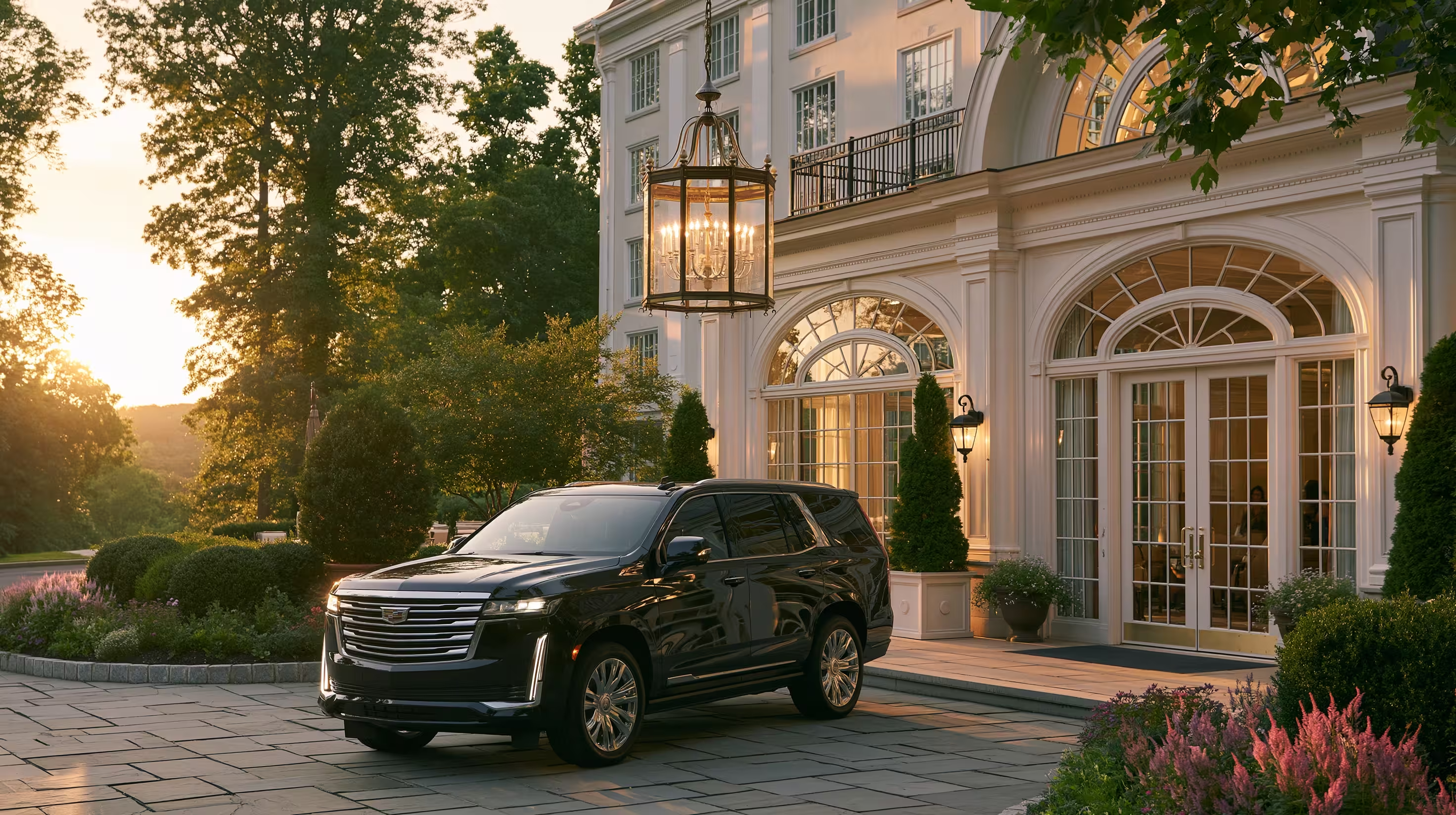
For a solo conference attendee with that configuration, an SUV is the honest answer. The sedan trunk handles two pieces cleanly; it doesn't handle four. Attempting to fit conference luggage into a sedan creates the curb problem — bags that don't fit require rearrangement while the next car in the hotel drop-off lane waits. An SUV absorbs the full load without that friction.
For two conference attendees sharing a vehicle — which the industry commonly books to manage travel budgets — the SUV handles both their luggage without compromise and provides cabin space for a working conversation or a review of the afternoon's materials during the transfer.
The Premium Sedan is the right vehicle for a solo traveler with carry-on luggage only, or for an executive making a day trip with a laptop bag and no checked baggage. The moment luggage volume increases past two standard pieces, the SUV is the more functional choice for this route and this type of traveler.
PHL Terminal Structure and Pickup Timing
Philadelphia International has four terminal buildings — A-West, A-East (international), B/C, D/E, and F — connected by an airside connector for ticketed passengers and curbside transportation at the arrivals level. Different airlines use different terminals: American concentrates in A and B/C; Southwest uses F; international arrivals clear through A-East.
For a car service pickup, confirming the terminal at booking is the step that prevents a missed connection. The driver needs to stage at the correct arrivals exit — and at PHL, the distance between terminal buildings at the arrivals level requires vehicle movement between terminals rather than a passenger walk.
For international arrivals, customs and baggage processing add 30 to 50 minutes beyond the scheduled landing time. A professional driver tracking the actual flight status — rather than staging from the scheduled arrival — eliminates the waiting problem at both ends: the passenger doesn't find an empty curb, and the driver isn't sitting in a no-parking zone for 45 minutes.
Major Events and the Valley Forge Demand Picture
The Valley Forge and Philadelphia regional calendar generates event-driven demand spikes that affect transportation availability across the corridor. The MLB All-Star Game and PGA Championship at Aronimink both draw significant corporate and VIP travel through PHL into the Main Line and Valley Forge areas — not just sports fans, but the corporate hospitality and entertainment infrastructure that surrounds major sporting events.
Pharmaceutical and healthcare conferences at the Valley Forge Convention Center create their own recurring demand peaks. These events are predictable and calendared well in advance, which means vehicle availability in the King Prussia and Valley Forge corridor tightens weeks before the event dates.
During any of these periods, due to traffic restrictions and elevated demand during major events, a minimum hourly booking requirement may apply. Minimums vary by event, vehicle class, and city — confirming availability and minimum requirements before finalizing the reservation is the right approach, particularly for arrivals during a known conference or event window.
For executives arriving from New York rather than flying into PHL, the NYC to Philadelphia car service is an increasingly common alternative for the Main Line and Valley Forge corridor — worth noting for a team where some members are driving down rather than flying in.

The Transfer as the Start of the Working Day
A conference arrival at Valley Forge often means the workday begins before the hotel check-in. Two executives reviewing the afternoon's presentation in the back of an SUV on the Schuylkill — when the road cooperates — arrive at the Sheraton ready for the first session rather than catching up from the lobby. The 30-minute transfer is productive time when the vehicle provides the space and quiet for it.
For vehicle options, Schuylkill timing guidance, and availability on the PHL to Valley Forge corridor, the full details are on the PHL to Sheraton Valley Forge route page.
John Doe