
DFW Airport sits almost exactly on the county line between Dallas and Tarrant County. The name has Dallas first. The airport is closer to Fort Worth. And yet most visitors arriving for business in Fort Worth spend their first ten minutes at baggage claim wondering why their car service keeps referencing Dallas drop-off zones.
The geography here matters more than it does at most airports. A clear plan for the transfer — which terminal, which route, which part of Fort Worth — is the difference between a 25-minute ride and a 45-minute detour.
DFW Terminal Routing: The First Variable to Confirm
DFW has five terminals arranged in a horseshoe. Terminals A and B sit on the Dallas side of the airport; Terminal D handles most international arrivals; Terminals C and E are on the western end, geographically closer to Fort Worth. Which terminal you arrive at depends entirely on your airline.
American Airlines operates out of Terminals A, B, C, and D. International arrivals typically clear through Terminal D regardless of origin carrier. Southwest doesn't serve DFW — that's Love Field, a different airport altogether.
For a car service pickup, the terminal number determines where the driver stages. A driver waiting at Terminal A while the passenger clears customs at Terminal D is a coordination failure that adds 20 minutes and a phone call. Confirming the terminal at booking — and updating it if the flight itinerary changes — is the step that prevents that.
For international arrivals at Terminal D, customs and baggage claim typically add 30 to 45 minutes after landing. A professional car service from DFW tracks the inbound flight and adjusts the pickup window accordingly. The driver isn't waiting at the curb from wheels-down — they're timing arrival at the terminal to match when the passenger actually exits.
Fort Worth vs. Dallas: Different Routes, Different Logic
This distinction trips up first-time DFW arrivals more than anything else. Both cities are accessible from the airport, but the routing logic is completely different and the drive times diverge significantly depending on destination.
Downtown Dallas is 25 miles east of DFW via I-635 and I-30. Downtown Fort Worth is 19 miles west via I-30 or SH-121. For a guest arriving at a Fort Worth hotel, routing east toward Dallas and then correcting course adds 30 minutes to a trip that should take 25.
The Near Southside — home to the Magnolia Avenue corridor, the medical district, and an increasingly dense hotel and restaurant scene — sits south of downtown Fort Worth, accessible via I-35W from DFW. West 7th, one of Fort Worth's primary entertainment and hotel corridors, connects the Cultural District to the riverfront and draws corporate and leisure travelers in roughly equal measure. Neither of these destinations benefits from a Dallas-oriented routing assumption.
Hotel Drover in the Stockyards District adds another layer. Mule Alley, where the hotel sits, is north of downtown Fort Worth — a straightforward 25-minute run from DFW via SH-183 and I-820 under normal conditions. Traffic on I-820 during afternoon rush hour extends that; a driver who knows the surface road alternatives through north Fort Worth doesn't add that time unnecessarily.
The DFW to Hotel Drover route covers the full routing and vehicle options for this corridor.
Sedan vs. SUV for Business Arrivals at Fort Worth
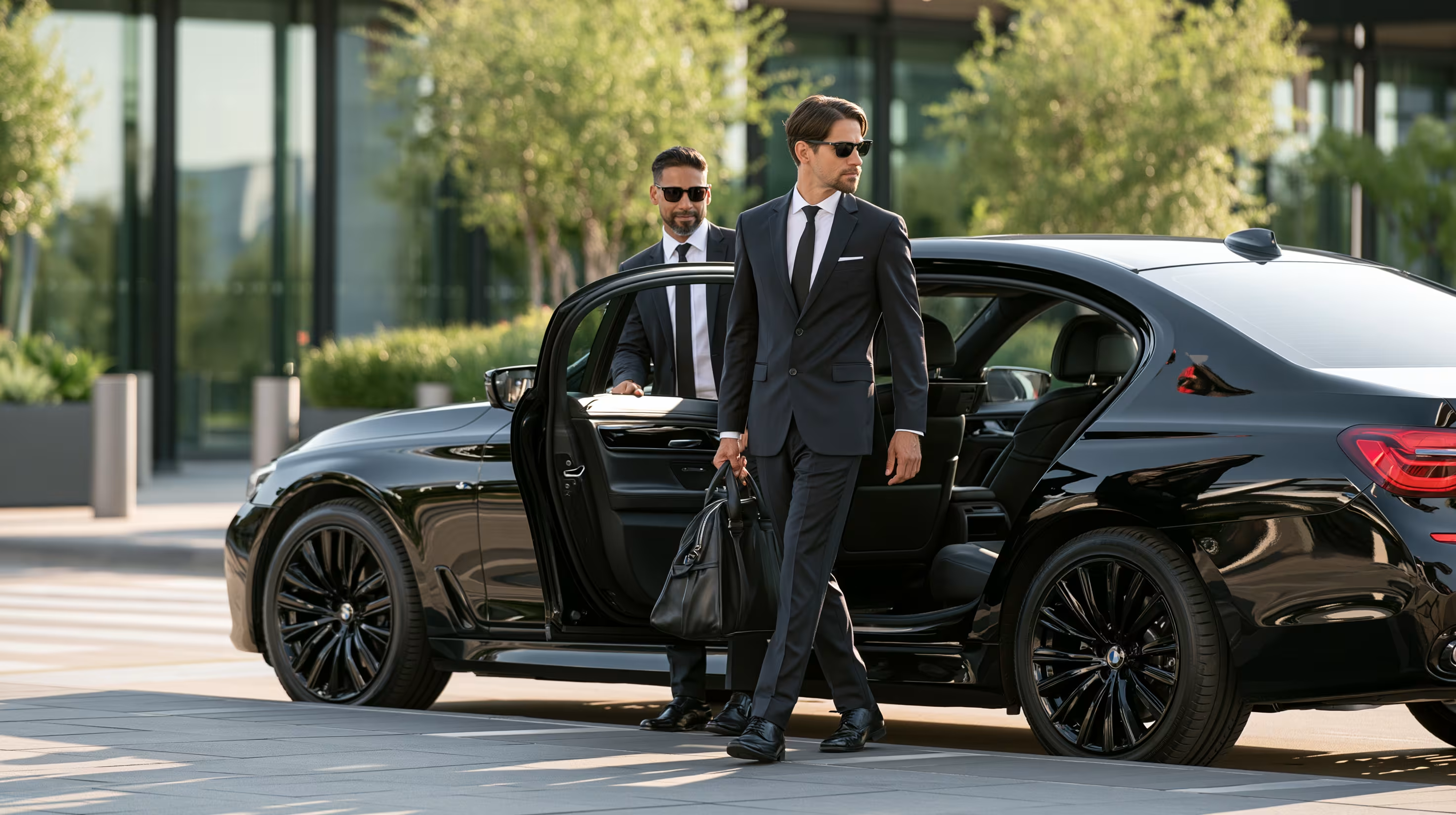
For a single executive traveling with a carry-on and a laptop bag, a Premium Sedan handles the transfer cleanly. Quiet cabin, professional driver, 25 minutes to the Stockyards. Nothing complicated.
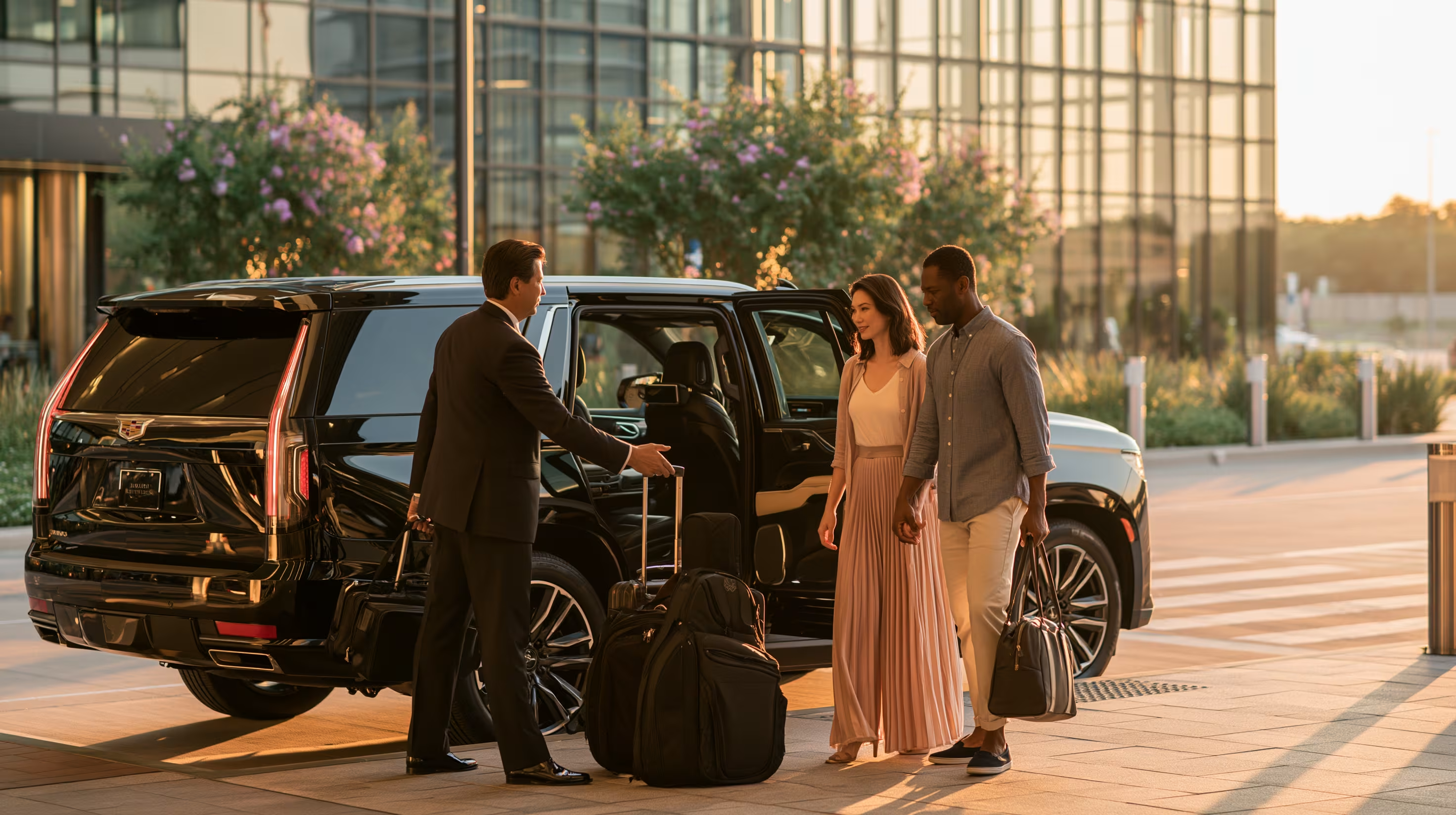
The calculation changes with luggage. A business trip to Fort Worth for a multi-day conference or corporate event typically means a full-size rolling bag, a garment bag for event attire, and a briefcase or laptop bag. That's three pieces for one person. Two business travelers sharing a vehicle doubles the count, and a standard sedan trunk doesn't absorb six pieces of luggage comfortably — particularly not the garment bags that a formal event in Fort Worth tends to require.
A Premium SUV handles four passengers with full luggage without the Tetris problem at the curb. It also provides more working space in the cabin — useful for two executives who need to debrief or review materials during the transfer rather than sitting in a compressed back seat. For a corporate arrival where the meeting or event begins shortly after check-in, those 25 minutes in the car are productive time if the vehicle allows it.
First Class — a Mercedes S-Class or equivalent — is the right call when the arrival itself is part of the impression. A client being picked up for a VIP dinner, a keynote speaker arriving at a major venue, a delegation being received by a Fort Worth host company. The cabin experience starts at the terminal door, not at the hotel entrance.
West 7th, Stockyards, and Near Southside: Drop-Off Specifics
Each Fort Worth neighborhood has its own drop-off character, and they're not interchangeable.
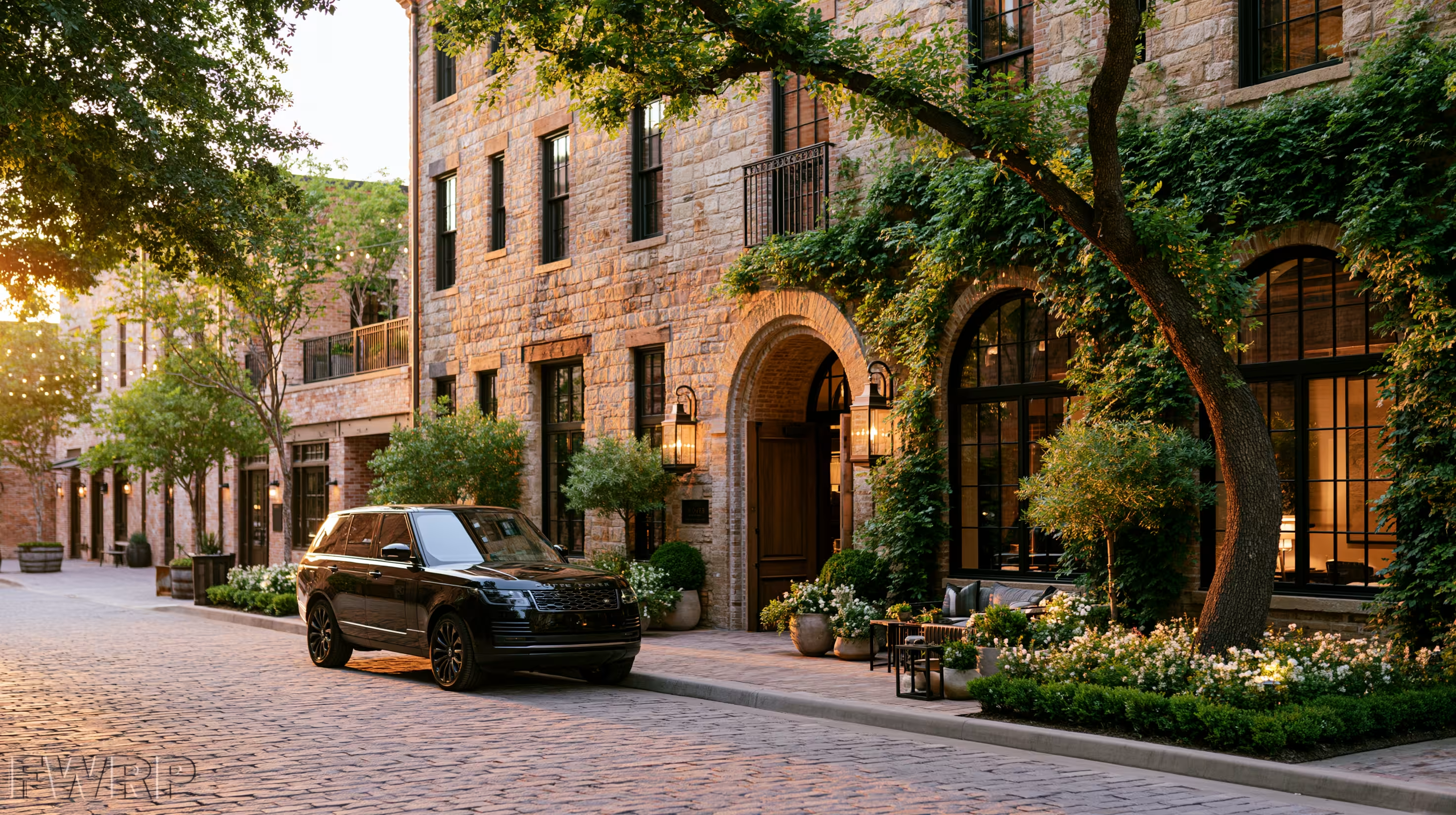
West 7th is a mixed commercial and residential corridor. Hotel drop-offs along the 7th Street strip work best from the hotel's dedicated entrance rather than curbside on the main road, where restaurant and bar traffic creates lane pressure in the evening. An experienced driver approaches from the correct direction and deposits the guest without navigating a U-turn on a one-way section.
The Stockyards District is Fort Worth's most visited tourist area, and it operates accordingly. Mule Alley — the primary hotel and dining corridor — handles drop-offs cleanly during off-peak hours. During the Fort Worth Stock Show & Rodeo or any major Stockyards event, the surrounding road network operates under elevated pedestrian and vehicle volume. A driver who's navigated a Rodeo drop-off before knows which approaches are closed, which are open but slow, and how to reach Hotel Drover without circling.
The Near Southside's Magnolia Avenue stretch has narrower drop-off options than the other corridors — worth confirming the specific address and approach before arrival rather than arriving at the neighborhood and figuring it out from there.
Fort Worth Rodeo Season and Event Demand
The Fort Worth Stock Show & Rodeo runs for several weeks each January and February, drawing over a million visitors to the Will Rogers Memorial Center complex west of downtown. During Rodeo dates, Fort Worth hotels fill to capacity well in advance, and transportation demand spikes across all vehicle classes and corridors.
Beyond the Rodeo, Fort Worth's event calendar creates recurring demand peaks: major corporate conferences at the Fort Worth Convention Center, concerts at Dickies Arena, and private events at venues across the Cultural District. The top Dallas-Fort Worth event venues give a sense of the scale and variety of what the metro area hosts throughout the year.
During any of these windows, vehicle availability tightens. Due to traffic restrictions and elevated demand during major events, a minimum hourly booking requirement may apply. Minimums vary by event, vehicle class, and city — confirming availability and minimums before finalizing the reservation is the right sequence, not a day-of consideration.
For a corporate arrival or VIP transfer tied to a specific Fort Worth event date, booking the vehicle at the same time as the hotel and event registration is the approach that keeps the logistics in order.
The Transfer as the Start of the Meeting
A Fort Worth business trip often begins before the first scheduled meeting — in the car, reviewing notes, confirming the afternoon agenda, or simply arriving without the edge that a long connection and a rental car line creates. The transfer from DFW to the Stockyards or West 7th is 25 minutes of time that either works for you or doesn't.
For vehicle options, terminal-specific pickup details, and availability for the DFW to Fort Worth corridor, the full booking information is on the DFW airport car service page and the DFW to Hotel Drover route.
John Doe