
Austin-Bergstrom is a convenient airport by most measures — one terminal, straightforward baggage claim, and a location that puts downtown Austin just seven miles away. That distance looks like a 15-minute drive on a quiet Tuesday morning. On a Thursday afternoon in March, it looks completely different.
The routes between AUS and downtown Austin are not interchangeable. The time of day, the day of the week, and what's happening in the city that week all determine which road gets you there in 20 minutes and which one parks you for 45. For a first-time visitor arriving at Austin Proper or any hotel in the Second Street District, understanding that routing logic before landing is the detail that changes the arrival.
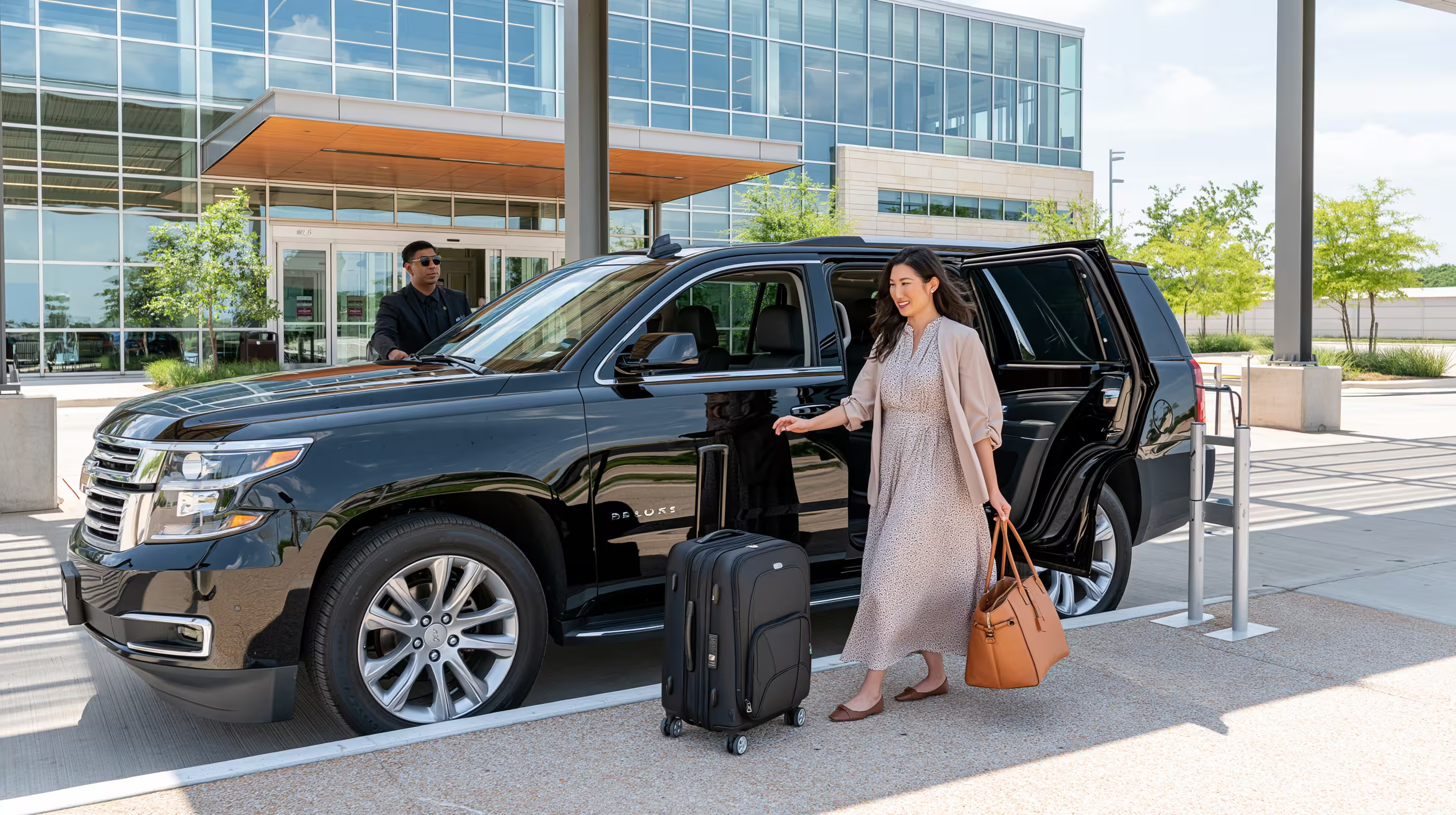
Two Routes, Two Different Problems
The primary corridors between AUS and downtown Austin are South Congress Avenue and I-35. They run roughly parallel, serve slightly different geographic paths into the city center, and behave completely differently under traffic.
South Congress is Austin's most visually recognizable approach to downtown — the skyline appears ahead as you drive north, the corridor is commercially dense, and the street itself generates its own traffic from restaurants, boutiques, and pedestrian activity. During off-peak hours, it's a 15-minute drive. During late afternoon on any weekday, the signal timing and surface street congestion on SoCo add 15 to 25 minutes over what a highway approach would require. South Congress also concentrates pedestrian crossing activity near the 1st Street and 2nd Street intersections — directly adjacent to where hotels like Austin Proper sit, which means the final few blocks can be the slowest part of the trip.
I-35 is faster in theory — a limited-access highway covering the same north-south distance without the signal stops. In practice, the downtown I-35 corridor has some of the most persistent congestion in Austin, particularly between the airport and the 6th Street exit during rush hours. The advantage disappears between 4 PM and 7 PM on weekdays, and the exit-to-hotel surface navigation adds time that the highway portion saves.
A driver who does this route regularly knows which corridor is moving on a given afternoon and chooses accordingly. That real-time routing judgment is what a professional car service from AUS provides that a navigation app estimating from a fixed algorithm doesn't.
Timing the Arrival: When the Math Changes
Austin's traffic has distinct pressure points that a first-time visitor doesn't know to plan around.
Weekday afternoons between 4 PM and 6:30 PM are the most consistently difficult window. The combination of tech company end-of-day traffic, downtown bar and restaurant pre-loading on Thursday and Friday, and the surface street density of the Second Street District creates a congestion cluster that's predictable but unavoidable without timing adjustment.
Weekend afternoons present a different pattern. Saturday brunch traffic and Sunday festival activity create midday pressure that doesn't exist on weekdays. A Sunday AUS arrival at 1 PM heading to downtown can encounter more friction than a Monday arrival at the same time.
Early morning arrivals — before 9 AM — and late evening arrivals — after 8 PM — are the windows where the routing calculation simplifies. Either corridor moves cleanly, and the seven-mile drive resolves in 15 minutes as advertised.
For travelers with schedule flexibility, communicating arrival timing preferences to a car service provider in Austin lets them build the routing plan around real conditions rather than the map distance.
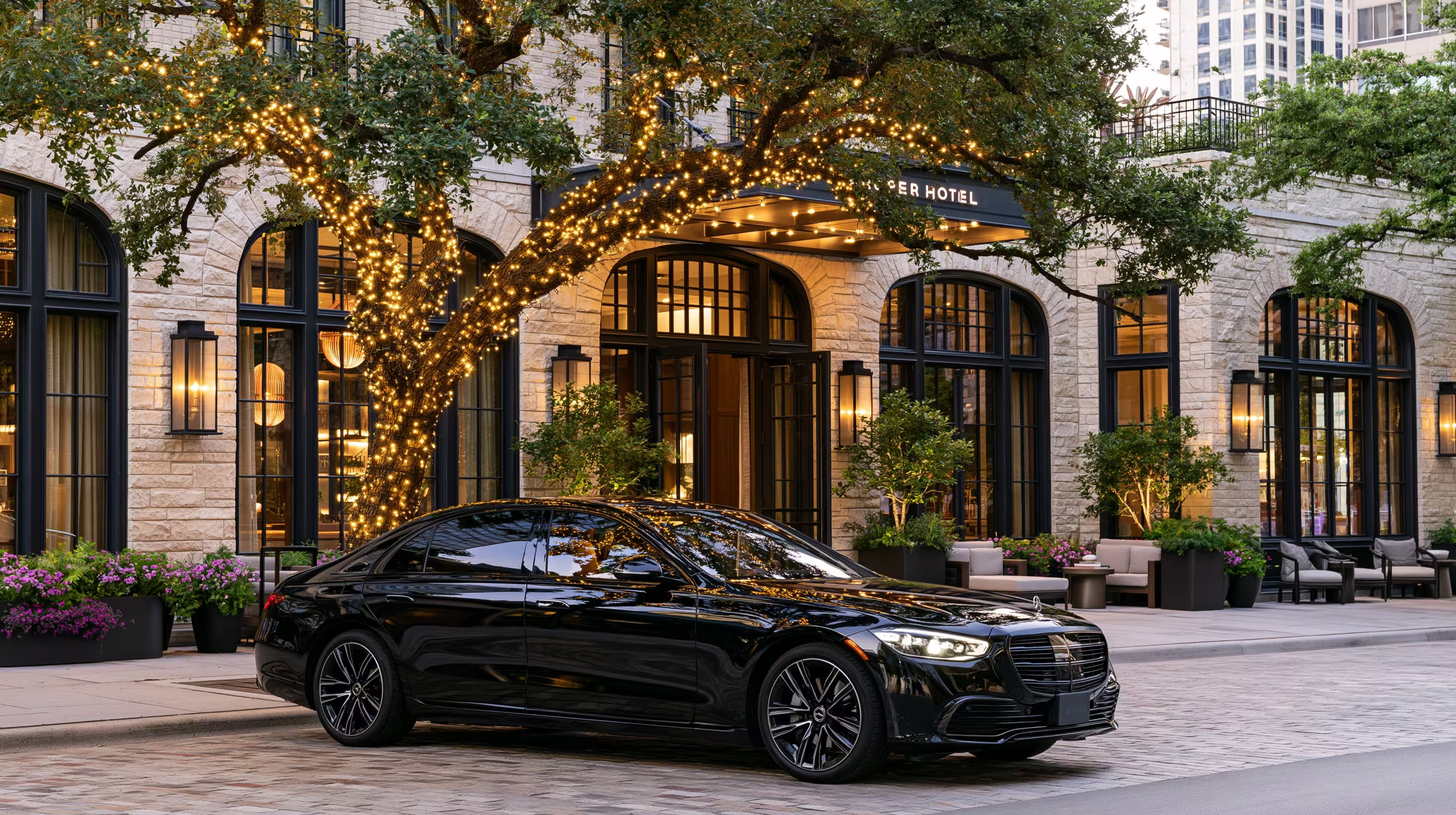
Sedan vs. SUV: What the Austin Proper Drop-Off Actually Requires
Austin Proper Hotel sits on West 2nd Street, one block from the Congress Avenue intersection. It's a boutique property in a dense urban block — the drop-off area is functional but not expansive, and the street itself carries a mix of delivery, hotel, and through traffic throughout the day.
For a solo traveler or a couple with carry-on luggage, a Premium Sedan handles this drop-off without complication. The vehicle fits cleanly in the available space, the passenger transfer is quick, and the car exits the block before the next arrival.
The calculation shifts with luggage volume. A business traveler spending three days in Austin for meetings and events typically carries a full-size rolling bag plus a garment bag or equipment case — two to three pieces that fill a sedan trunk to capacity without room for a second passenger's bags. Two travelers at that configuration need an SUV, not because of cabin space but because of cargo reality.
A Premium SUV also provides more useful cabin space for the transfer itself — relevant for a couple reviewing the next day's schedule, or a traveler who wants to take a call during the ride without being cramped. Austin Proper's West 2nd Street location accommodates an SUV drop-off without the footprint problems that a larger vehicle would create in the same block.
SXSW: When the Entire Routing Calculation Resets
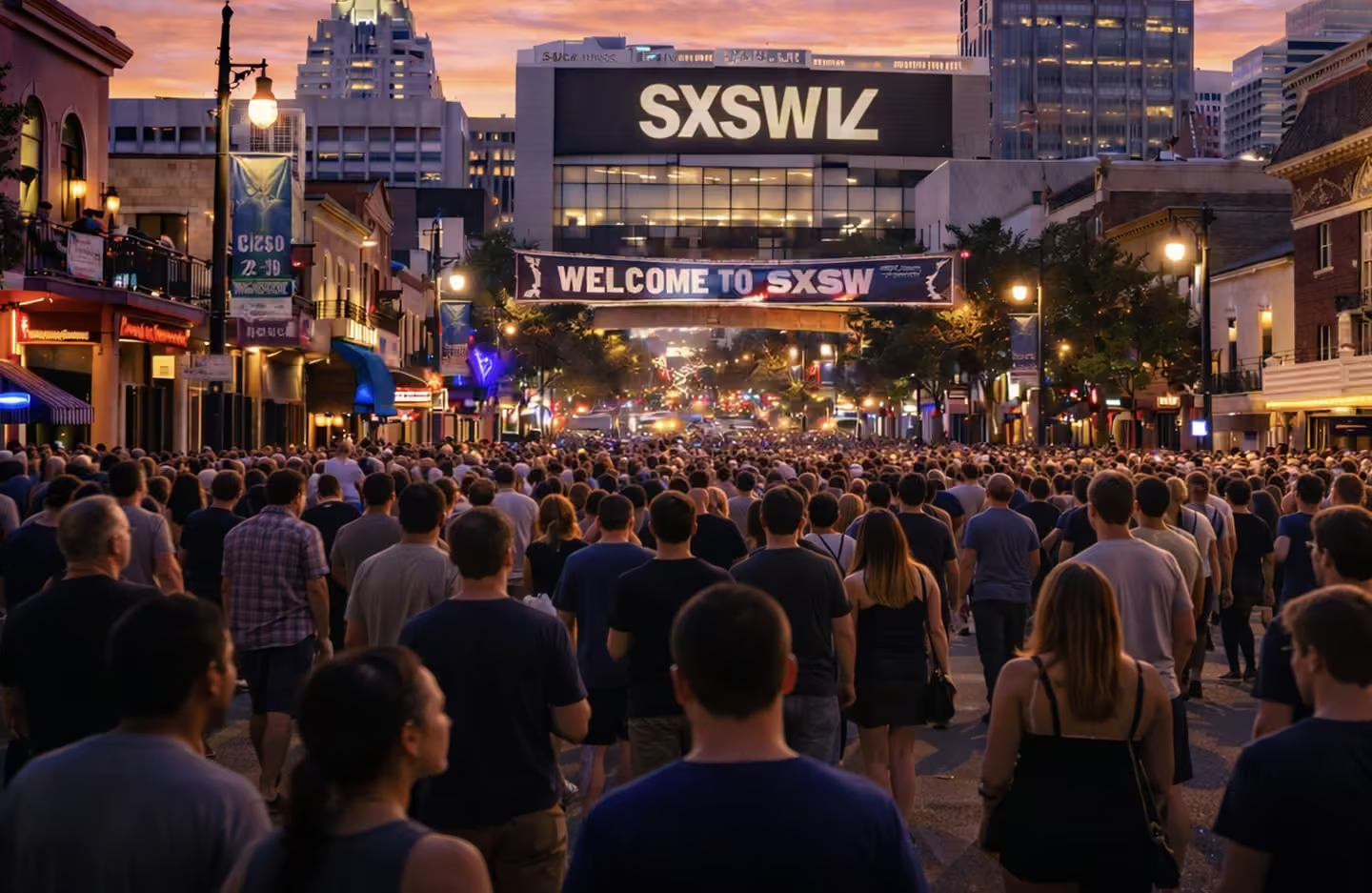
South by Southwest remaps Austin's transportation geography for two weeks every March. The Second Street District — where Austin Proper sits — is directly inside the festival's primary venue zone. Congress Avenue, 2nd Street, and the surrounding blocks operate under a completely different traffic and access logic during SXSW than during any other period.
Street closures change daily. Loading zones for hotels are compressed by event infrastructure. The approach to Austin Proper from the airport that takes 20 minutes on a February Wednesday can take 50 minutes during SXSW peak hours — not because of general traffic, but because of block-by-block access restrictions that shift with the festival schedule.
For SXSW arrivals, the routing expertise of an experienced Austin driver matters more than at any other time of year. The SXSW Austin transportation page and the SXSW transportation guide cover the festival-specific logistics in detail — including how the transfer from AUS to downtown operates differently during SXSW versus standard travel dates.
Due to traffic restrictions and elevated demand during major events, a minimum hourly booking requirement may apply. Minimums vary by event, vehicle class, and city — confirming availability and minimum requirements before finalizing any SXSW-period reservation is essential, not optional. Vehicles that are available with 48 hours' notice in February are committed weeks out by mid-February for SXSW dates.
ACL Festival in October creates a similar pattern at a smaller scale — Zilker Park and the surrounding South Austin corridors experience the access and demand compression that SXSW generates citywide. Any major Austin event week is a signal to book the airport transfer early.
What the Drop-Off Looks Like and Why It Matters
Austin Proper's West 2nd Street entrance is a clean hotel drop-off in normal conditions — the driver pulls to the entrance, bell staff manages the luggage handoff, and the vehicle exits without holding the block. It's the kind of drop-off that works smoothly when the vehicle is the right size and the driver knows the approach.
During SXSW or any high-traffic period, the same block operates under different conditions. A driver who hasn't done this drop-off during festival week won't know that the standard approach from Congress Avenue is closed from 6 PM onward, or that the 2nd Street approach from Lavaca gives cleaner access. That local knowledge is the part of a professional transfer that isn't visible until it's needed.
For the full routing details, vehicle options by travel configuration, and booking availability on the AUS to Austin Proper corridor, the airport transfer page and the direct route booking cover both standard and event-period conditions.
John Doe