
When Los Angeles hosts the Summer Olympic Games in 2028, it won’t just be staging the world’s most prestigious sporting event. It will be presenting a new model for how mega-events operate in modern global cities.
Unlike past Olympics built around a single, newly constructed Olympic Park, LA28 is designed as a distributed, city-wide experience. Venues will span Los Angeles and surrounding cities, leveraging existing world-class infrastructure while minimizing long-term disruption. For visitors, that ambition comes with a clear implication: planning travel, accommodations, and transportation will be just as important as securing tickets.
The LA 2028 Olympic Games will run from July 14 through July 30, 2028, bringing more than 10,000 athletes from over 200 countries to Southern California. Millions of spectators are expected to follow, making LA28 one of the largest global travel events of the decade.
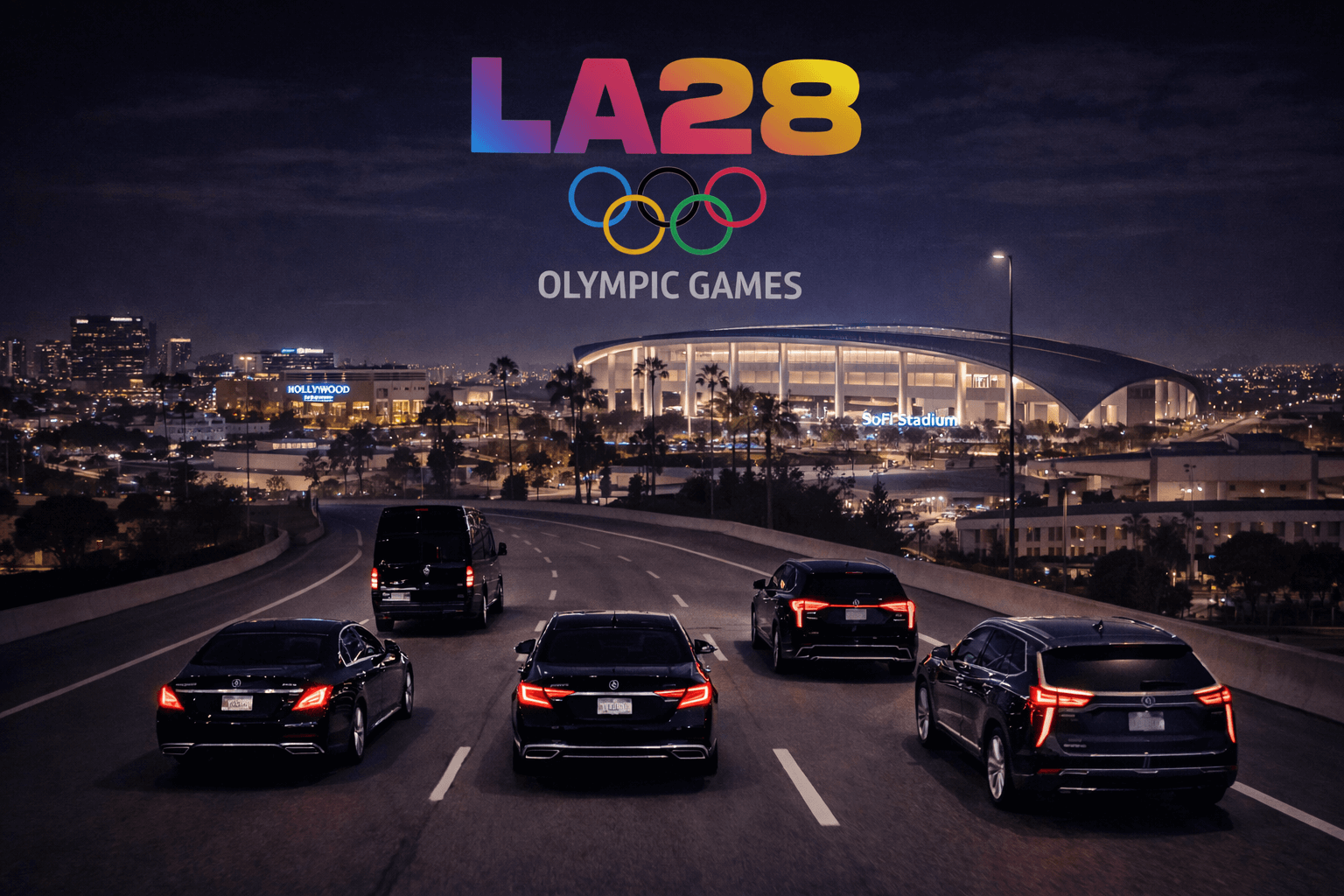
A Regional Olympics, Not a Single Destination
LA28 breaks from tradition by spreading events across multiple venue clusters rather than concentrating them in one district. Competitions will take place in Los Angeles, Inglewood, Downtown LA, Santa Monica, Long Beach, Pasadena, and Carson, among other locations.
Iconic stadiums, beaches, arenas, and existing sports facilities will host events ranging from athletics and swimming to basketball, soccer, gymnastics, and beach volleyball. For the city, this approach avoids overbuilding. For visitors, it introduces complexity. Travel time between venues will vary widely depending on location, time of day, and traffic conditions.
Why Logistics Will Matter More Than Ever
Los Angeles is no stranger to congestion. During the Olympics, that reality will be amplified by security perimeters, road closures, restricted vehicle zones, and heightened demand across every transportation channel.
Public transit will be heavily utilized, rideshare availability will be inconsistent, and pricing volatility will be common. Visitors relying on spontaneous transportation decisions may find themselves navigating delays that affect not just convenience, but access to scheduled events.
In short, LA28 rewards preparation.
Where the World Will Stay During LA28
Hotel inventory across Los Angeles will be tested during the Olympic period. Demand will be highest near major venues, but savvy travelers will balance proximity with accessibility.
- Downtown Los Angeles offers central positioning and access to multiple venues.
- Inglewood places visitors close to major stadiums.
- Santa Monica and Venice provide proximity to coastal events and a resort-style atmosphere.
- Beverly Hills and West Hollywood cater to luxury travelers.
- Pasadena and Glendale offer quieter alternatives outside the city core.
Many Olympic visitors are expected to stay outside the most congested zones and rely on private transportation to move efficiently between events.
Arriving in Los Angeles for the Olympics
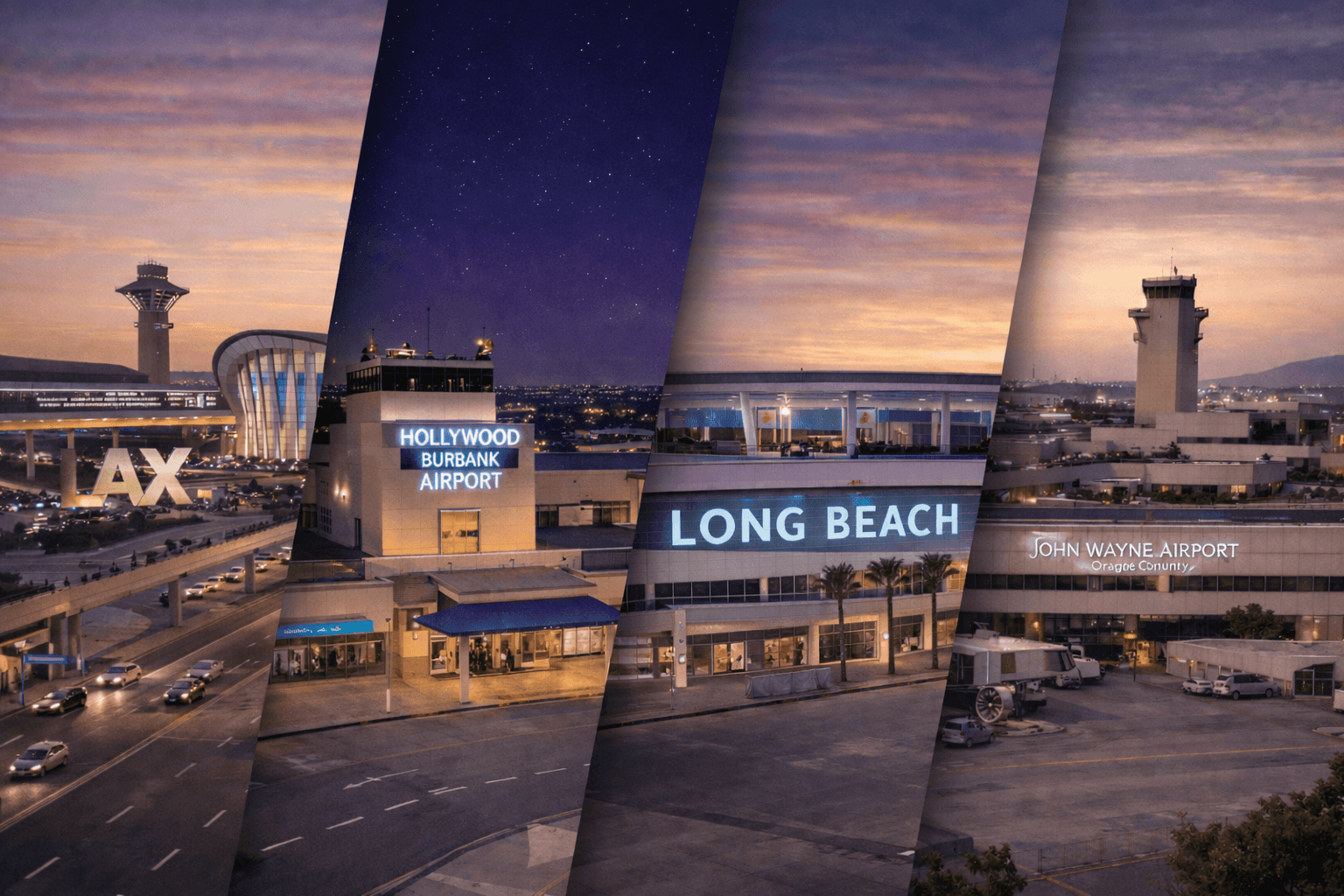
Los Angeles International Airport (LAX) will serve as the primary gateway for international travelers, supported by:
- Hollywood Burbank Airport
- Long Beach Airport
- John Wayne Airport
All are expected to operate near capacity throughout the Games.
Pre-arranged airport transfers will play a critical role in smoothing arrivals and departures during peak Olympic traffic, particularly for international travelers unfamiliar with local logistics.
Transportation Will Define the Experience
For LA28 visitors, transportation is not a detail — it is the experience.
Chauffeur services will be widely used by executives, sponsors, media, and VIP guests seeking predictability and flexibility. Airport transfers will remain the most reliable option for managing arrivals and departures during peak travel days.
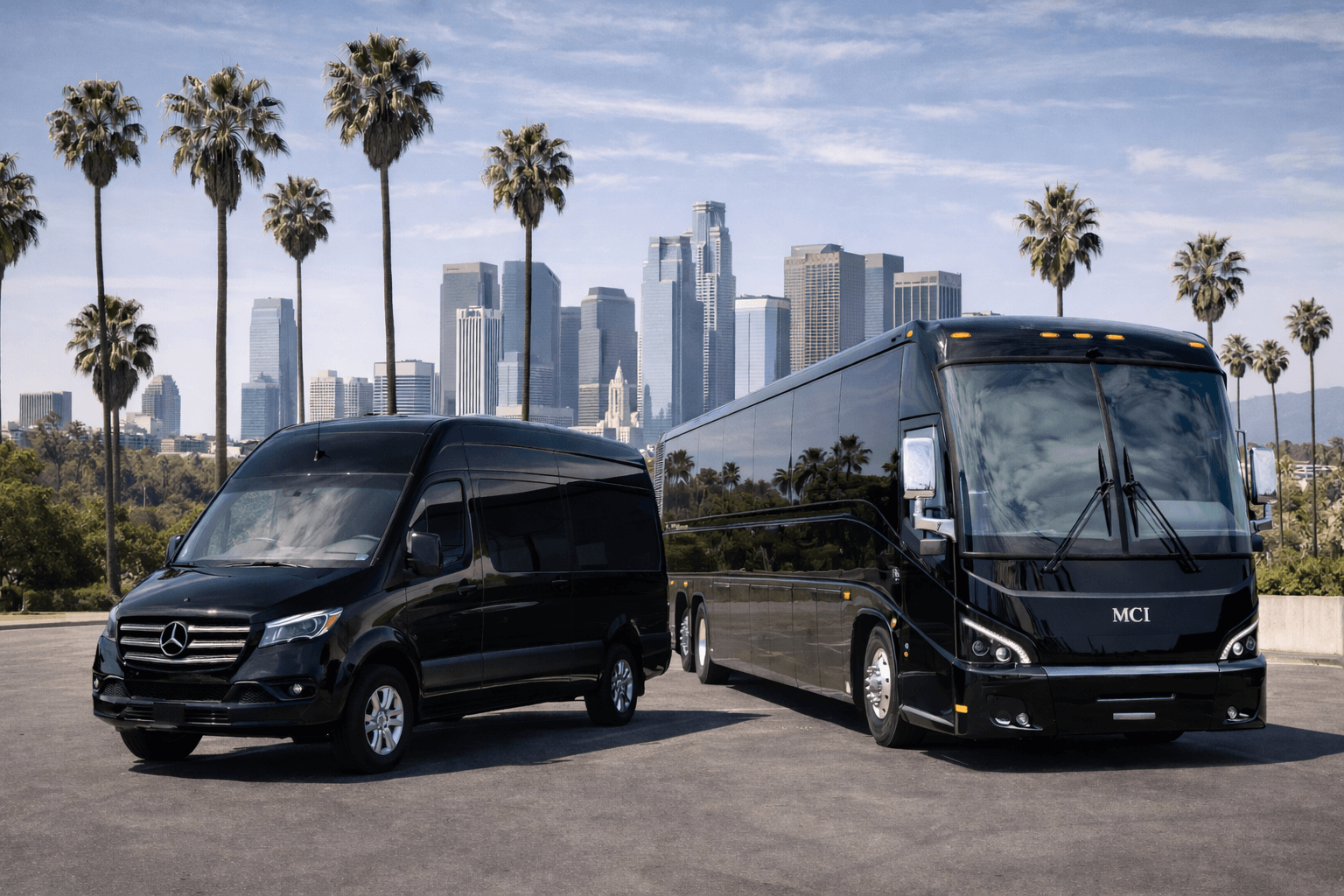
Sprinter Vans are expected to be one of the most in-demand vehicle categories, accommodating families, small groups, and teams traveling together with luggage.
Charter buses will be essential for larger groups, fan organizations, corporate hospitality programs, and event operations, offering seating capacities ranging from 15 to 56 passengers.
Private, pre-booked transportation will allow visitors to bypass many of the friction points that accompany large-scale events, including parking limitations, restricted zones, and last-mile access challenges.
Timing Is Everything
Olympic venues will operate with enhanced security screening and controlled entry points. Visitors should plan to arrive at venues at least 90 to 120 minutes before scheduled start times.
Transportation planning must account not just for distance, but for security procedures and access controls.
Why Early Booking Is a Strategic Advantage
Transportation supply during the LA 2028 Olympics will be finite. Sprinter Vans and charter buses, in particular, are expected to sell out well in advance.
Early booking:
- Secures availability
- Stabilizes pricing
- Ensures continuity across multiple event days
As with accommodations, those who plan early will move more freely than those who wait.
A New Standard for Olympic Travel
The LA 2028 Olympic Games are positioned to redefine how global sporting events integrate into existing cities. For travelers, that evolution places greater responsibility on planning — but also offers greater flexibility for those who prepare.
Transportation will not simply move people from point A to point B. It will determine access, timing, and overall experience.
Bookinglane provides premium transportation solutions for LA28, including chauffeur service, airport transfers, Sprinter Vans, and charter buses, designed specifically for large-scale global events.
As the Olympics approach, strategic planning will separate seamless experiences from stressful ones.
This article serves as the foundation of our LA 2028 Olympic travel series. Additional guides will explore vehicle options, group transportation strategies, and venue-specific logistics in detail.
John Doe