
Atlanta is one of the few American cities where the airport rail connection actually works. MARTA's Gold and Red lines run directly from Hartsfield-Jackson into downtown and Midtown, stopping within a few blocks of most major hotels. For a solo traveler with a carry-on and comfortable shoes, it's a legitimate option.
For a business traveler with a checked bag, a garment bag, a laptop case, and a dinner reservation at 7 PM, it's a different conversation.
What MARTA Gets Right — and Where It Stops
The MARTA airport link is fast, direct, and largely immune to the I-75/I-85 traffic that makes Atlanta's highway corridors unpredictable. The 25-minute ride from the airport to Midtown stations like Arts Center or Midtown costs a few dollars and runs on a fixed schedule. On a clear weekday afternoon with a carry-on, it's genuinely competitive with a car.
The trade-offs become visible at the margins. MARTA doesn't have luggage assistance. The platform-to-street walk at Midtown stations adds several blocks in Atlanta's summer heat. The train runs to a station, not to a hotel entrance — the last quarter-mile requires navigation, a rideshare, or a walk that feels longer with rolling bags than it looked on the map.
For a VIP executive whose first Atlanta impression is the Four Seasons lobby, or a guest arriving with two checked bags after a six-hour connection, or anyone whose itinerary requires a stop between the airport and the hotel, MARTA's fixed-route logic doesn't accommodate any of it. That's the gap a professional car service fills — not by being faster in every condition, but by being the right tool for a different set of requirements.
ATL Terminal Structure: The Detail That Affects Pickup Timing
Hartsfield-Jackson is organized around a central domestic terminal with two concourses feeding into a series of satellite concourses connected by an underground automated people mover. International arrivals process through the International Terminal, which sits on the southern end of the complex and adds a separate exit sequence.
For a domestic arrival, the walk from the gate to baggage claim is manageable — typically 10 to 15 minutes from wheels-down depending on the concourse. For an international arrival, customs and baggage processing at the International Terminal adds 30 to 60 minutes before street level, depending on the flight's origin and the queue at inspection.
A professional car service from ATL tracks the actual flight status and the terminal, and times the driver's arrival at the pickup zone to match when the passenger exits — not when the plane lands. Specifying international vs. domestic at booking, along with the terminal or concourse if known, is the detail that prevents a missed connection at the curb.
I-75/85 vs. Surface Streets: Atlanta's Routing Variable
The connector — where I-75 and I-85 merge into a single corridor through downtown and Midtown — is Atlanta's most congested stretch of highway and the primary route between the airport and the Four Seasons on 14th Street. In off-peak conditions, the drive from ATL to Midtown runs 20 to 30 minutes. Between 3:30 PM and 7 PM on weekdays, that window expands to 45 or 60 minutes without much warning.
Surface street alternatives exist — Northside Drive, Spring Street, and Peachtree Street offer parallel approaches into Midtown that bypass the connector's worst sections. They're slower in theory and genuinely faster in practice when the highway is backed up past downtown. An experienced Atlanta driver makes that routing call based on real-time conditions rather than the default navigation path.
The surface street approach also deposits the vehicle closer to the Four Seasons' 14th Street entrance, which sits at the Peachtree Street intersection — a hotel drop-off point that works better approached from the north or west than from the highway-exit sequences to the south.
Premium Sedan vs. First Class: Reading the Arrival Context
For a solo executive arriving for a one-day meeting — carry-on, laptop bag, returning the same evening — a Premium Sedan covers the transfer cleanly. The vehicle is professional, the driver handles the routing, and the 20-minute ride to Midtown is quiet and efficient. Nothing more is needed.
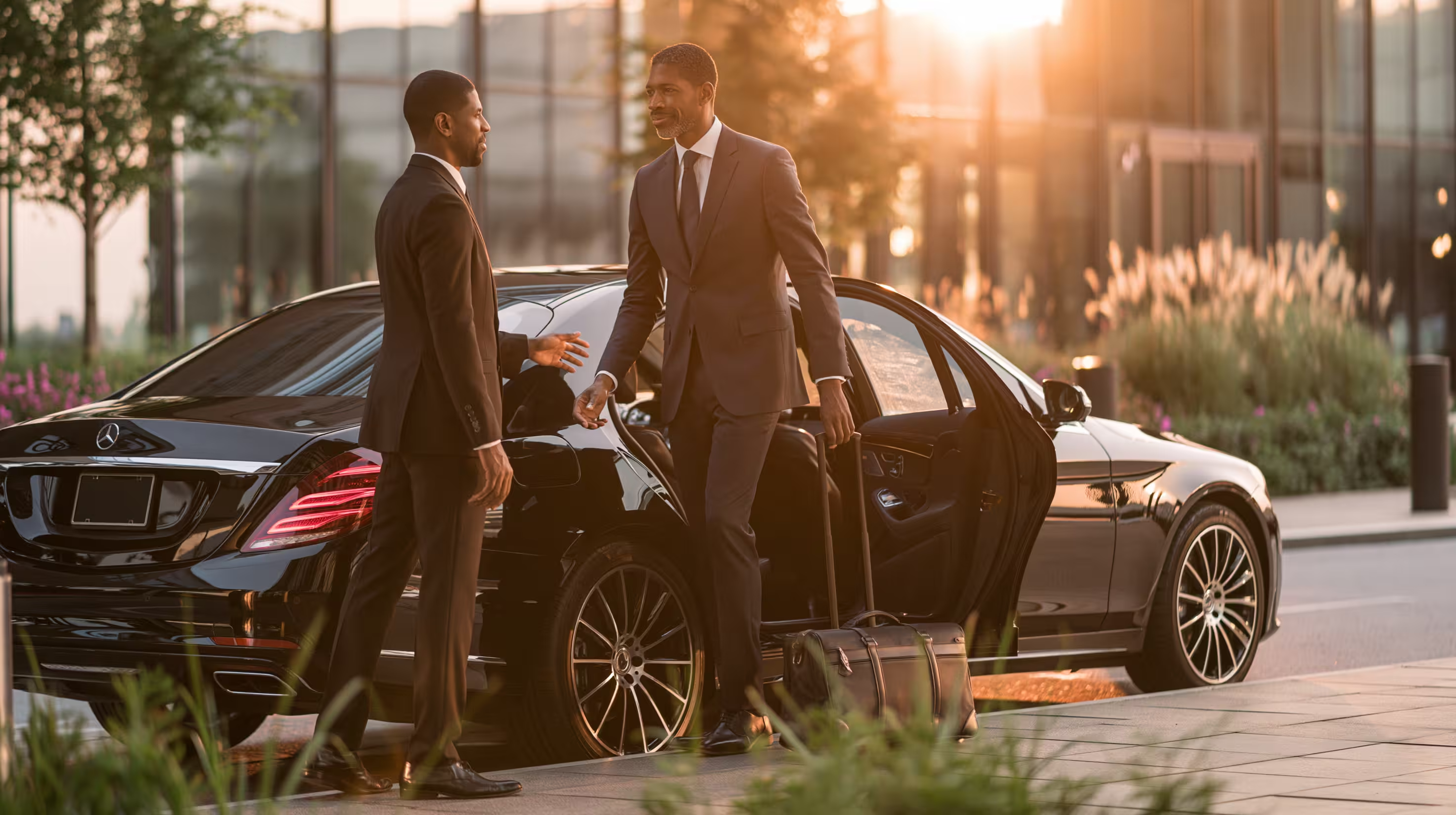
The First Class tier — a Mercedes S-Class, a fully appointed Escalade — changes the arrival experience in ways that matter in specific contexts. A senior partner arriving for a client pitch. A keynote speaker being received by a conference host. A C-suite executive whose client will be watching how they arrive. In those cases, the cabin experience starts at the airport door, not at the hotel entrance, and First Class is the version of this transfer that communicates the right thing before a word is spoken.
For two guests traveling together from ATL to the Four Seasons — a common pattern for executive pairs or a client-and-host pairing — First Class handles two passengers and their combined luggage without the space compromise that a standard sedan creates. The rear cabin of an S-Class or equivalent accommodates a working conversation, a document review, or simply the quiet decompression that a long travel day earns.
The Premium SUV sits between these two options: full luggage capacity, four-passenger comfort, professional presentation without the luxury-tier premium. For two business travelers with full checked bags who need space more than they need the cabin statement, the SUV is typically the right call.
Dragon Con, Final Four, and the Atlanta Event Calendar
Atlanta hosts events at a scale that reshapes its transportation environment in ways that visitors from smaller markets underestimate. Dragon Con — one of the largest fan conventions in North America — occupies five or six major downtown hotels simultaneously over Labor Day weekend, drawing over 80,000 attendees and effectively closing the Peachtree Street corridor to anything resembling normal traffic.
The NCAA Final Four, when hosted in Atlanta, concentrates thousands of visitors across a compressed 72-hour window with the Georgia Dome and surrounding venues at capacity. SEC Championship weekends produce a similar pattern. Major concerts at State Farm Arena add localized pressure to the downtown hotel drop-off zones.
During any of these events, the ATL to Midtown transfer operates under different conditions than the standard weekday calculation. Street closures, elevated pedestrian volume, and compressed pickup zones around major hotels all add time and complexity that the standard routing doesn't account for. Due to traffic restrictions and elevated demand during major events, a minimum hourly booking requirement may apply. Minimums vary by event, vehicle class, and city — confirming availability and minimum requirements before finalizing the reservation is the right approach for any Atlanta event weekend, not a formality.
The Atlanta Sprinter van service covers the group and event-period transportation options for the broader ATL market, including the configurations that work when the city is operating at peak capacity.
The Four Seasons Drop-Off on 14th Street
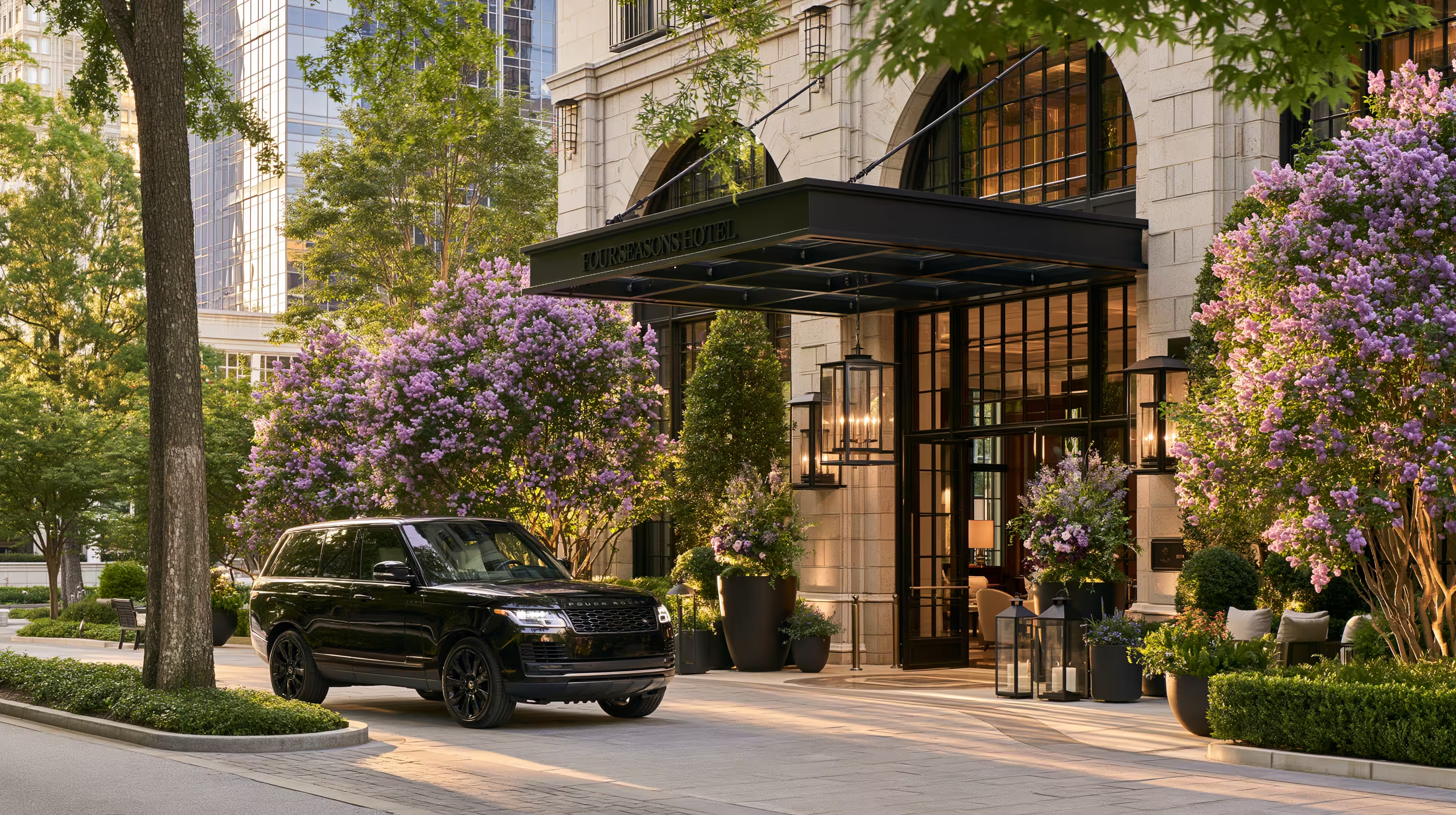
The Four Seasons Atlanta's entrance sits on 14th Street NE at Peachtree Street — a Midtown intersection that carries consistent traffic and has a functional hotel drop-off zone that works cleanly under normal conditions. The porte-cochère handles standard vehicle arrivals without complications when the timing is right.
During high-traffic periods, the 14th and Peachtree intersection experiences elevated pedestrian and vehicle volume from the surrounding Midtown office and dining district. A driver who stages the drop-off correctly — approaching from the right direction, timing the arrival to avoid the intersection's peak cycle — completes the handoff without holding the block. The guest transitions from vehicle to lobby without navigating a street-level logistics problem.
For full vehicle options, pickup timing by terminal, and availability on the ATL to Midtown corridor, the car service route page and the ATL airport transfer page cover both standard and event-period conditions.
John Doe