
Coordinating a group transfer from SLC to Park City looks simple until you map out the details. Gear, staggered flights, a mountain canyon that adds real driving variables, and a resort drop-off point that works better with one vehicle than three.
For a group of eight to twelve people — a film team arriving for Sundance, a corporate retreat heading to Deer Valley, a group of friends who booked the same week at the Waldorf Astoria — the vehicle choice isn't just about comfort. It's about whether the group stays together or fragments across three separate cars, three different arrival windows, and a canyon road where convoy driving is more complicated than it sounds.
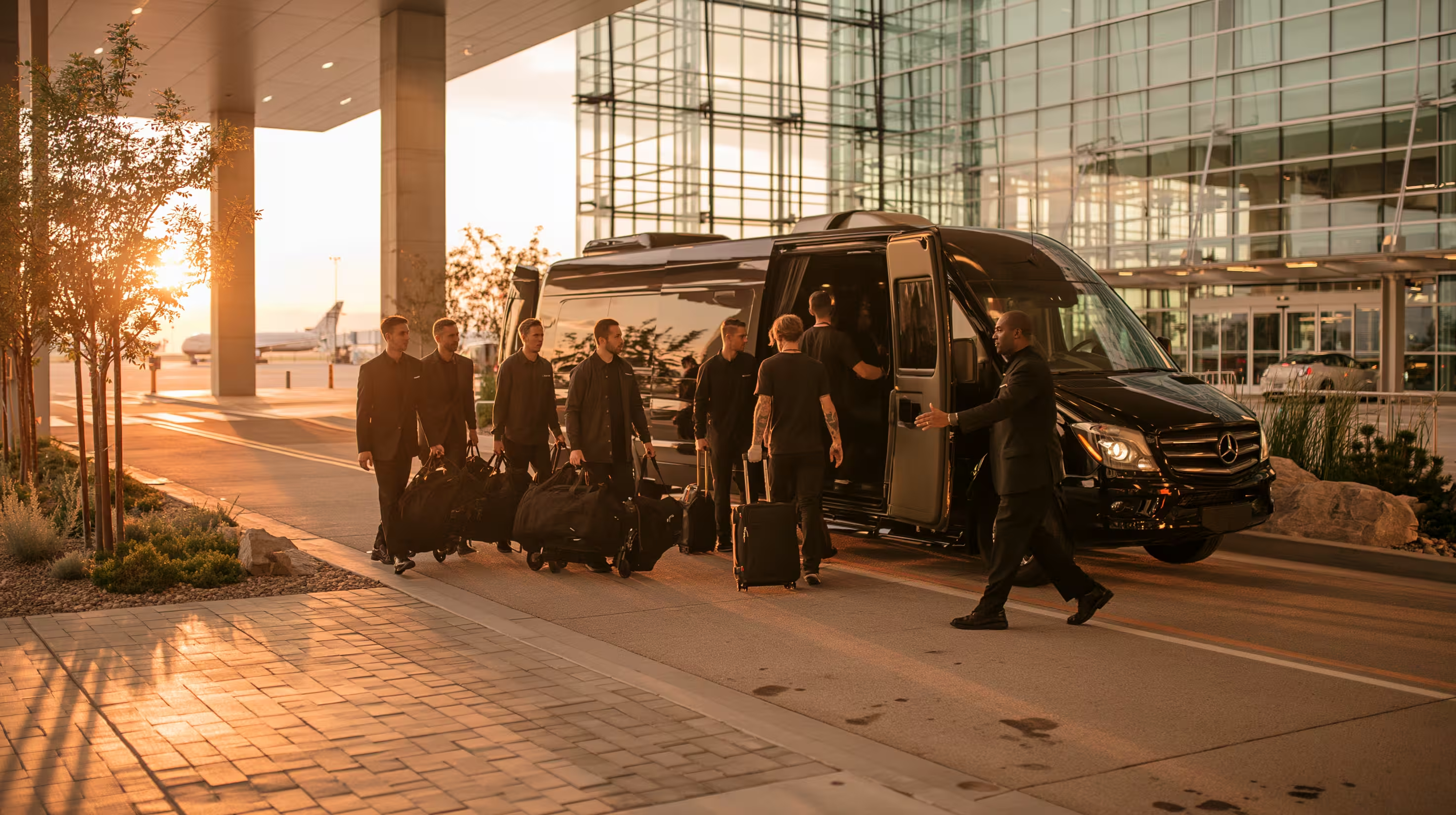
What Makes the SLC–Park City Route Different From a Standard Airport Transfer
Most airport transfers are urban or suburban. The road is flat, the traffic is predictable, and splitting a group across multiple vehicles creates no material risk — the cars arrive within minutes of each other and the hotel lobby becomes the natural reunion point.
The Parleys Canyon route changes that dynamic. I-80 East from SLC climbs through a high-desert mountain corridor with grades, curves, and varying road conditions that require driver attention in a way that a flat urban highway does not. In summer, the canyon is scenic and generally fast. In shoulder seasons and winter, conditions introduce variables — UDOT speed advisories, heavier truck traffic, occasional weather delays — that make convoy coordination across three separate vehicles an active management problem rather than a background concern.
A single vehicle eliminates the coordination problem entirely. The group is together, the driver handles the canyon, and arrival at the Park City property is one event, not three staggered ones.
Sprinter Van vs. Multiple Sedans: The Real Comparison
The default group instinct is to book multiple black cars or SUVs and call it solved. For a flat urban route in good conditions, that works. For Parleys Canyon with twelve people and their gear, the trade-offs are worth examining.
Three Premium SUVs carrying four people each provides reasonable passenger comfort. But each vehicle needs to handle its own luggage assignment — and gear-heavy trips fill cargo areas fast. A group arriving for a ski week, a film shoot, or a multi-day corporate retreat typically travels with more than standard carry-ons. An SUV comfortably carries four passengers with luggage for two or three of them at full kit. Four passengers with a complete set of luggage and equipment each is a different configuration. The third SUV may be running with partial luggage while the first two are at capacity, which means someone's bags have been redistributed and nobody fully remembers which went where.
A Sprinter Van carries up to twelve passengers with shared cargo management. Group luggage loads into a designated rear area with a single loading sequence at the airport. The problem is solved once, not three times in parallel at the curb.
There's also the energy consideration — particularly for a Sundance film team or a corporate group that has a working session or a dinner on arrival day. Twelve people riding together for 45 minutes arrive at the hotel in the same mood, having had the same conversation. The same group split across three vehicles arrives in three separate social states, which sounds trivial until it's the beginning of a three-day working retreat.
For a group of six to eight with lighter luggage — business travel carry-ons, a conference trip — the SUV fleet remains competitive. The Sprinter's advantage scales with group size and gear volume. The vehicle recommendation changes based on what's actually in the group, not just how many people are traveling.

Gear and Equipment: The Detail That Requires Explicit Confirmation
Group trips to Park City often involve more than standard luggage. A ski group carries ski bags, poles, and boot bags on top of personal luggage. A mountain biking group brings bike cases and gear bags. A film team may have production equipment alongside personal bags. Any of these configurations changes the cargo equation significantly.
Standard vehicle cargo areas are not designed for oversized or high-volume gear. A Sprinter Van can accommodate equipment and luggage in the rear cargo section with proper loading — but this needs to be confirmed with the provider at booking, not assumed. Some configurations require long bags to load diagonally; others may need a cargo carrier arrangement. The point is that gear-heavy travel requires an explicit luggage brief, not a standard group booking.
For groups traveling with equipment, the booking conversation should include: number of passengers, number and type of gear bags (with dimensions if relevant), any oversized items, and whether bags need to be separated or can travel together. A provider who confirms the configuration in advance avoids a problem at SLC baggage claim that no one wants to solve on a travel day.
Group transportation through a coordinated provider means this conversation happens during booking, not at the airport.
Sundance, Summer Season, and Why Booking Window Matters
Park City operates on a year-round event calendar with predictable demand peaks. The Sundance Film Festival in January is the most compressed — ten days, tens of thousands of attendees, and vehicle availability that tightens three to four weeks out. Studio teams, PR agencies, and film delegations all move through SLC during the same narrow window, often in groups, often with specific timing requirements.
But summer has its own demand peaks. The Kimball Arts Festival, Deer Valley outdoor concerts, July Fourth weekend, and corporate retreat season create periods where group vehicle availability is genuinely constrained — not as severely as Sundance, but enough to matter for a group that needs a Sprinter Van on a specific date.
Due to traffic restrictions and elevated demand during major events, a minimum hourly booking requirement may apply. Minimums vary by event, vehicle class, and city — confirming availability and minimum requirements before finalizing any reservation around known high-demand dates is the right approach.
For group travel tied to a specific event or arrival date, the booking logic is the same regardless of season: confirm the vehicle at the same time the accommodation is reserved, not after the itinerary is finalized.
The Hotel Arrival Point: One Vehicle vs. Three
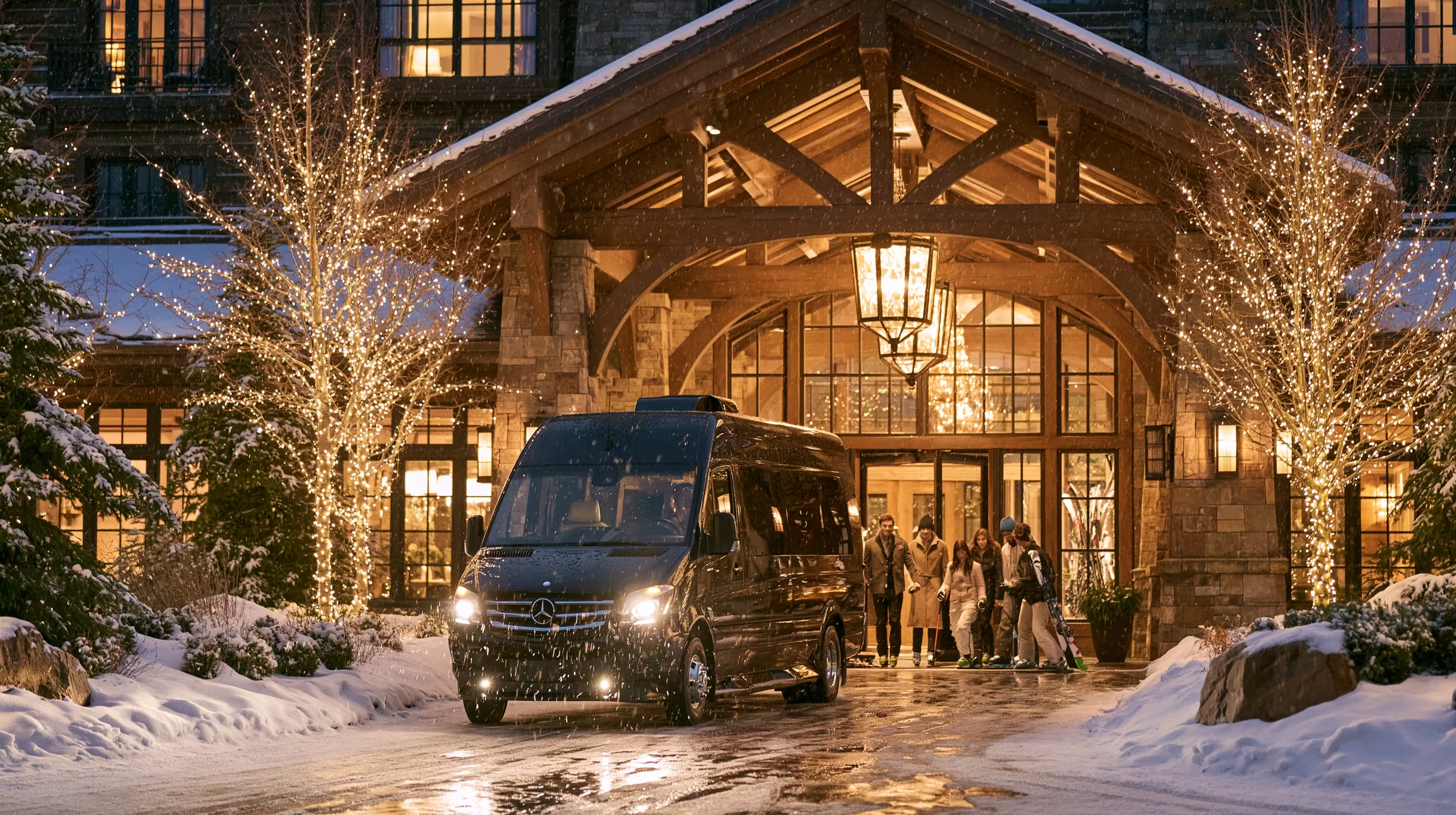
The Waldorf Astoria Park City's approach through Canyons Village is a resort road — narrower than a city street, with a specific entrance sequence that works cleanly for one vehicle at a time. Three vehicles trying to stage simultaneously at a mountain resort entrance creates a logistics problem that falls on the bell team to solve.
One Sprinter Van pulls up, bell staff meets the vehicle, luggage and gear move to the appropriate storage, and the group walks into the lobby together. That's the arrival that matches the rest of a premium Park City trip. Three SUVs arriving in sequence, each with their own handoff, their own luggage situation, and their own timing, is a version that works — but with more moving parts than necessary.
For groups whose trip begins the moment they step out of the vehicle, that distinction is worth planning around.
The full logistics details, vehicle options, and booking information for the SLC to Park City group corridor are available on the airport transfer page and the SLC to Waldorf Astoria Park City route.
John Doe