
The group chat is active. Someone's flight got delayed. Someone else is already at baggage claim. A third person is connecting through Denver and lands 90 minutes after everyone else. Welcome to the part of group travel that no one plans for carefully enough.
Coordinating airport pickups across a group isn't complicated in principle — but it breaks down fast when the details aren't locked in before anyone boards. Houston has two commercial airports serving the same Galleria corridor from completely different directions, which means a group spread across IAH and HOU isn't just dealing with staggered times. They're dealing with staggered routes, staggered vehicle windows, and a hotel check-in that can't wait indefinitely.

IAH and HOU Are Not Interchangeable for Group Logistics
George Bush Intercontinental handles the majority of Houston's long-haul and international traffic. Most corporate groups flying in from New York, Chicago, or anywhere international will land at IAH, 30+ miles north of the Galleria. Hobby Airport draws Southwest Airlines traffic primarily — domestic, often connecting, frequently the choice of price-sensitive or regionally-based team members.
A group of twelve arriving from three different cities might have eight people coming into IAH across a four-hour window and four people landing at HOU in a completely separate time slot. Treating this as "one airport pickup" is where the coordination falls apart.
The right approach is to plan the fleet assignment by airport and by time block — not by headcount alone. Eight people at IAH over four hours is not one van trip. It may be two separate runs depending on flight clustering, or it may be a staged pickup where the vehicle waits on property between arrivals. Both scenarios require a driver who's been briefed on the actual flight manifest, not just the destination.
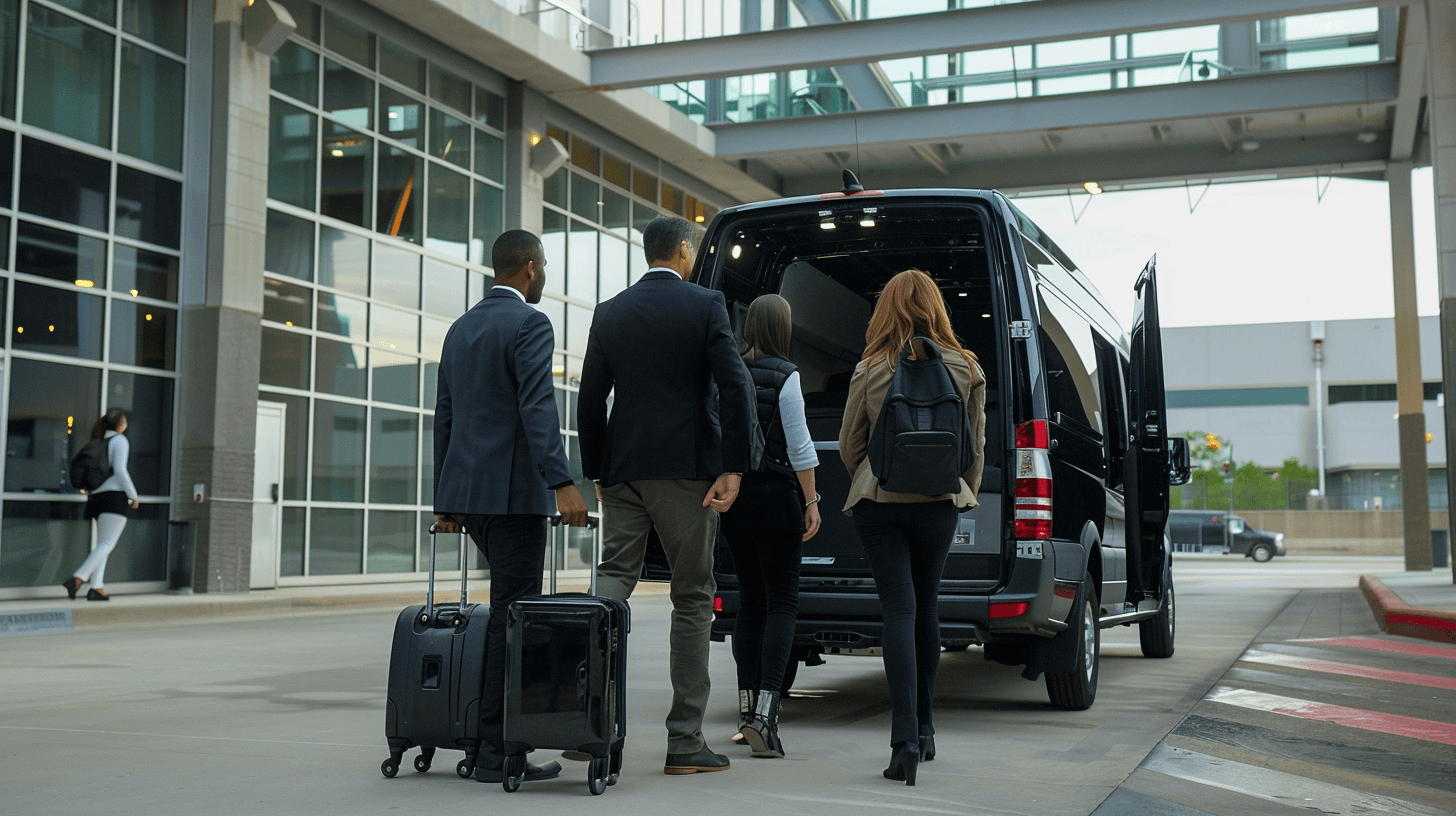
Sprinter Van vs. Multiple Sedans: The Trade-Off Is Real
For groups arriving within the same 45-minute window at the same airport, a Sprinter Van is the clean solution. Up to twelve passengers, full luggage capacity, one driver managing one pickup point. Nobody waits at the curb while a second car circles. The pre-event energy stays intact because the group is already together.
When arrivals are staggered by more than an hour, a single van sitting on airport property for 90 minutes while waiting for the last flight is a vehicle committed to a holding pattern. That works if the timing is deliberate and planned. It doesn't work if it was assumed without confirmation.
Multiple black car or SUV assignments make more sense for staggered arrivals — each matched to a flight cluster, each delivering a subset of the group to the hotel as they land. The hotel becomes the consolidation point. When the last vehicle arrives, the full group is assembled and the day can start.
For groups of four to six with significant luggage — think a corporate team checking in for a three-day event — the Premium SUV often beats the math of a single sedan. Three people, four bags, and a carry-on each fills a sedan uncomfortably. An SUV absorbs that load without anyone compromising.
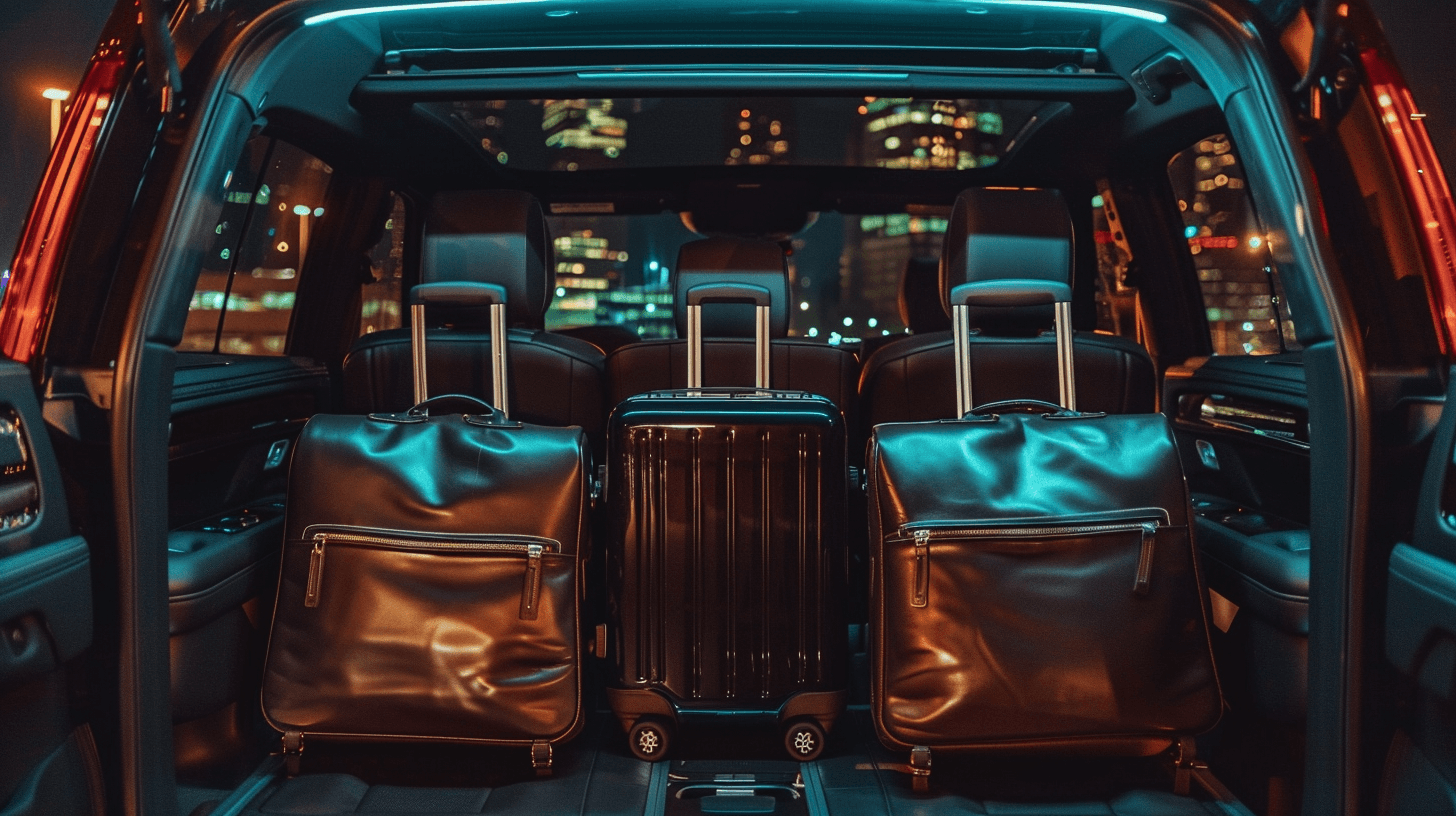
The Hotel as the Logical Assembly Point
The instinct is to coordinate the airport pickups so that everyone arrives simultaneously. That's almost never achievable. Flights get delayed, customs takes longer than expected, one connection misses and rebooks.
The more reliable model is to move people to the hotel as they land and let the hotel lobby serve as the natural gathering point. Each vehicle handles one arrival cluster and deposits them at the same address. By the time the last flight has cleared baggage claim, the first arrivals have checked in, freshened up, and are ready to move.
This model also reduces the real-time coordination load. Instead of tracking eight flight statuses simultaneously, the group lead communicates a single destination to each driver and trusts the fleet to execute the individual legs. A group transportation provider operating multiple vehicles does this routinely — the fleet knows to deliver to one address, in sequence, as arrivals clear.
The assembly at the hotel then transitions cleanly into the event transfer, whether that's a dinner reservation, a meeting, or the opening session of a multi-day conference.
Fleet Coordination: What "Managed" Actually Means
There's a meaningful difference between booking multiple vehicles separately and coordinating a fleet through a single provider. Separate bookings create separate accountability chains. If one vehicle is late, there's no visibility across the others. If a flight delay cascades into a schedule shift, each driver is working from independent information.
Fleet coordination through one provider means a single point of contact who has visibility across all assignments. A delayed IAH arrival gets communicated to the vehicle already holding on property. The hotel is notified. The group lead gets an updated ETA without having to make four separate calls.
For a corporate delegation, a conference team, or any group where the first impression starts at the airport, this matters beyond just convenience. The Houston Rodeo transportation page covers this specifically for event contexts — and it's worth noting that during high-demand event periods, a minimum hourly booking requirement may apply. Minimums vary by event, vehicle class, and city, so confirming availability and terms before the group's travel dates is the right sequence, not after the flights are booked.
The same principle applies during any large Houston event week. Vehicle availability tightens, routes through certain corridors shift, and last-minute coordination becomes significantly harder than it would be on a regular week.

Luggage Counts Before Vehicle Assignments
This step gets skipped more often than anything else. A group of ten sounds like a Sprinter Van problem. A group of ten where six people each checked two bags is a different vehicle problem.
Before confirming any vehicle assignment for a multi-arrival group, the luggage count should be part of the brief. Executive teams traveling for a week carry more than a group heading to a weekend event. International arrivals often come with oversized bags, equipment cases, or gifts. A vehicle that fits ten passengers comfortably may not fit ten passengers and thirty bags without making a second luggage run.
The practical rule: count bags, not people. Then confirm the vehicle class against that count. A Sprinter Van handles twelve passengers and reasonable luggage; at twelve passengers with two checked bags each, the math starts to work against you.
For larger delegations moving from IAH to the Galleria with significant gear, the split between passenger vehicles and a separate luggage run sometimes makes more logistical sense than one overloaded vehicle — particularly when the timeline is tight and the group needs to be presentable on arrival.
Getting It Right Before Anyone Lands
The decisions that determine whether a group airport pickup runs well are all made before the first flight departs. Flight manifest, luggage estimates, airport assignment by airline, time windows at each airport, hotel address, and a clear plan for how to handle a delay — these aren't day-of details. They're the pre-work.
For a group with flights coming into both IAH and HOU, the full logistics picture for the IAH to Galleria route is available to review and book in advance. For the HOU side, the vehicle options and routing specifics are covered in the Houston Hobby Airport car service overview.
The goal is simple: everyone gets to the hotel, no one waits at the curb longer than they should, and the group starts the day together rather than in pieces.
John Doe