
The itinerary looks manageable on paper. Eight people, three airports, one hotel. The flights are spread across a six-hour window. Someone is arriving internationally through JFK; two others are coming on separate domestic flights through EWR; the rest land at LGA across three different arrival times. Everyone needs to be at Union Square by 7 PM for the opening dinner.
This is not a transportation problem. It's a logistics problem that happens to involve transportation. And it's exactly the kind of situation where the difference between a coordinated fleet and a collection of individually booked cars becomes obvious — usually around 5:30 PM when someone is still waiting at Newark.
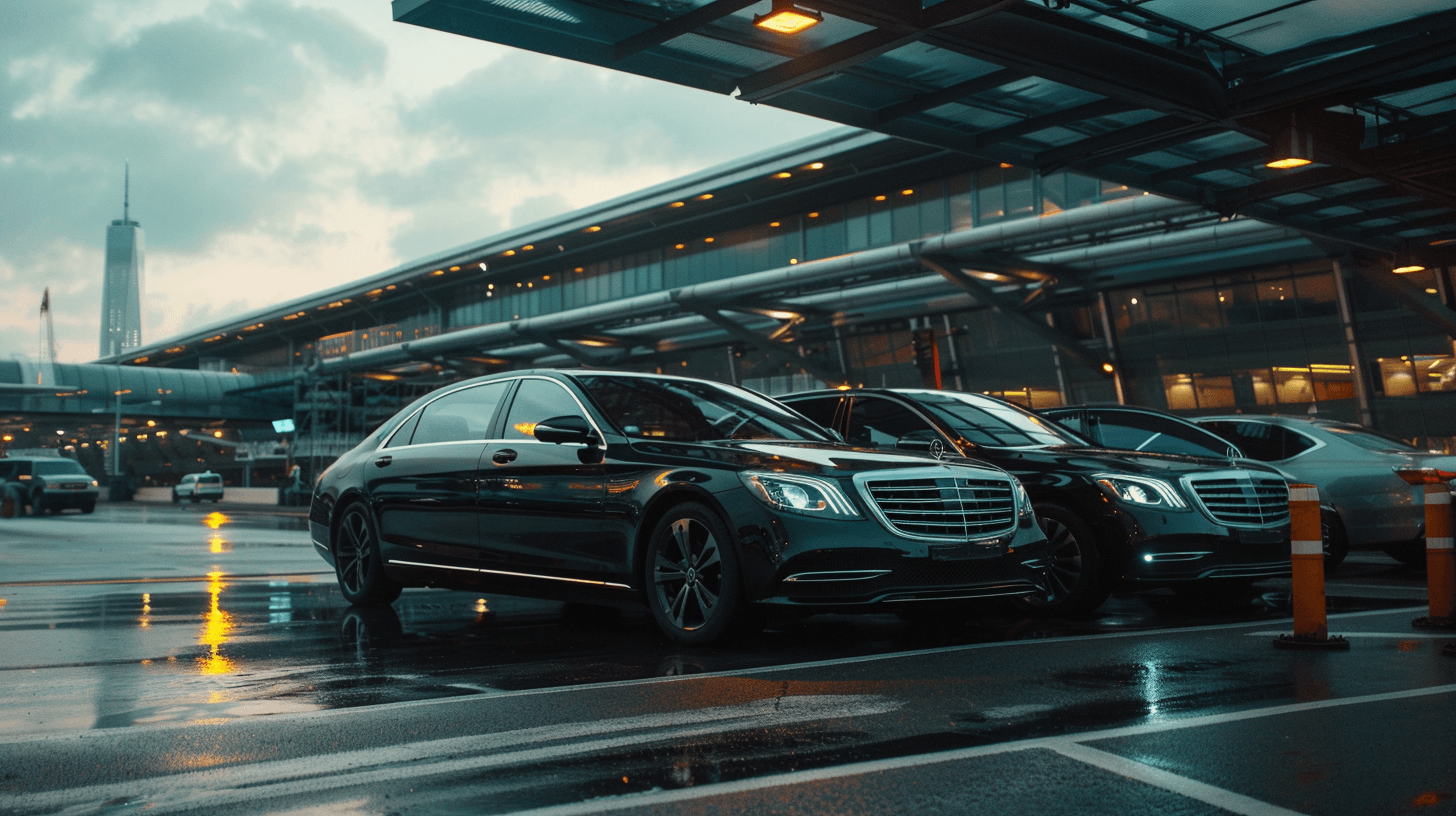
Why Three NYC Airports Require Three Separate Plans
JFK, EWR, and LGA are not interchangeable access points to the same city. They sit in three different directions from Manhattan, each with distinct routing options, traffic patterns, and airport-exit timelines. A group split across all three is effectively three separate logistics problems that need to resolve at the same destination within the same window.
JFK international arrivals carry the longest airport-exit variable: customs, Terminal 4 baggage claim, and the Queens approach into Manhattan. Budget 90 minutes from wheels-down to car — more on a congested afternoon. The JFK to Union Square route is the longest in both distance and time, which means those team members need the earliest pickup window.
EWR arrivals clear faster for domestic flights but cross into New Jersey, adding the Holland Tunnel variable. The EWR to Union Square route is competitive in distance but exposed to tunnel congestion in a way that JFK and LGA routes aren't.
LGA is geographically closest, but rush-hour surface traffic from Queens to Manhattan can compress that advantage entirely. The LGA to Union Square route performs best when arrivals clear before 3 PM. After that, the timing math changes.
Planning the fleet against these differences — rather than treating all three as equivalent airport pickups — is where corporate group coordination either holds together or doesn't.
Fleet Assignment Logic: Match the Vehicle to the Arrival Cluster
The default instinct is to assign vehicles by headcount. Four people get a sedan, six people get a Sprinter. That's a starting point, not a plan.
For a corporate group spread across three airports, the vehicle assignment should follow the arrival cluster logic: how many people are landing within the same 45-minute window at the same airport, and what are they carrying?
Two executives arriving together at JFK with checked bags and laptop cases are better served by a Premium SUV than a sedan — full luggage space, more working room in the cabin, no logistical friction at pickup. A single traveler arriving at EWR on a domestic flight with a carry-on is a clean sedan run. Three colleagues landing within 30 minutes of each other at LGA, all with checked bags from a cross-country flight, may cluster into one SUV if the timing aligns, or require two vehicles if the flights are spread enough that waiting becomes inefficient.
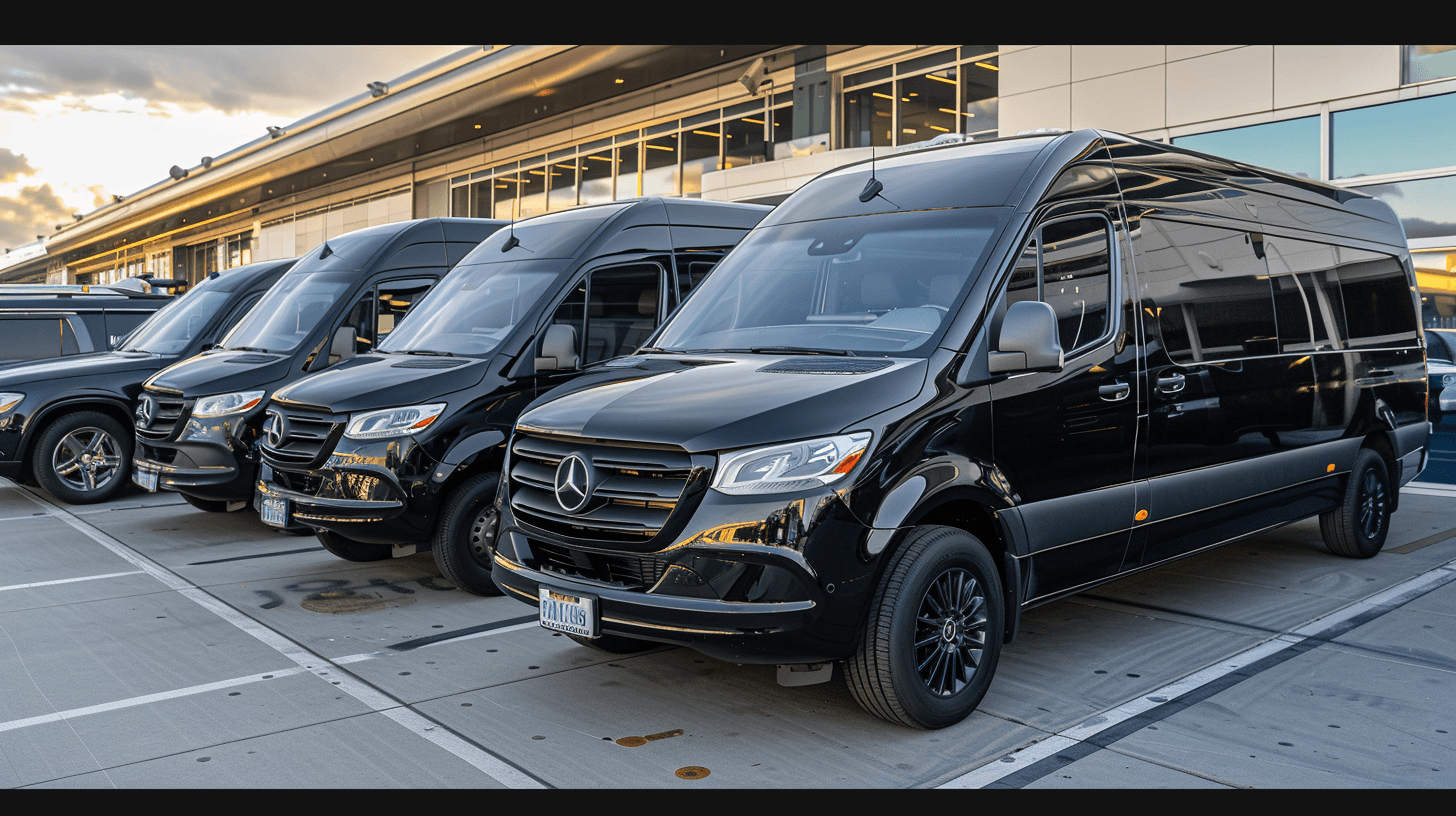
The Sprinter Van earns its place when four or more people from the same airport are within a tight arrival window and the luggage math supports it. It's not the default for a corporate group — it's the answer to a specific configuration. For most executive team arrivals, a coordinated fleet of Premium Sedans and SUVs handles the job with less complexity at the hotel drop-off point.
What group transportation through a single provider actually means here: one contact has visibility across all three airport assignments, all flight statuses, and all vehicle positions simultaneously. When the EWR arrival delays by 40 minutes, the vehicle assignment adjusts without the group lead making three calls.
Union Square as the Consolidation Point
The W Hotel on Park Avenue South isn't a conference center with a dedicated loading dock. It's a boutique Manhattan hotel on a busy street in a high-pedestrian neighborhood. Drop-offs work best when they're staggered, not simultaneous.
Five vehicles trying to offload in a compressed window on Park Avenue South creates a street problem. The same five vehicles arriving over 90 minutes, in sequence, each completing a clean handoff, creates no problem at all.
This is the logistical argument for letting the hotel serve as the natural assembly point rather than trying to choreograph simultaneous arrivals. JFK travelers, who have the longest route, may actually arrive at the hotel around the same time as LGA travelers who left 40 minutes later — because the JFK pickup window accounts for the customs variable. EWR arrivals, depending on tunnel conditions, land in their own time slot.
The group lead doesn't need to track this in real time. They need to communicate one thing to each vehicle: the hotel address, the arrival contact, and the guest name. The fleet handles the rest.
Conference Week and Event Scheduling: The Demand Reality
New York's major conference and event calendar creates recurring spikes in fleet demand that have nothing to do with weather or random bad luck. When a large industry conference pulls 3,000 executives into Manhattan over two days, every executive assistant at every company is booking airport cars for the same narrow window.
The New York Auto Show draws significant corporate entertainment. Fashion Week is its own category — twice a year, the midtown and downtown transportation ecosystem reorganizes around show schedules. The US Open fills Queens-area roads and bleeds into JFK and LGA routing.
During any of these windows, the New York car service landscape tightens noticeably. A corporate group with confirmed bookings has priority; a group trying to book 48 hours out during Fashion Week does not. Due to traffic restrictions and elevated demand during major events, a minimum hourly booking requirement may apply. Minimums vary by event, vehicle class, and city — confirming availability and minimum requirements before the team's travel dates is the professional move.
For a company offsite or a multi-day conference, this confirmation should happen at the same time the hotel block is reserved, not after the agenda is finalized.
What the Brief to the Provider Should Include
The logistics brief for a multi-airport corporate arrival should answer six questions before anyone arrives at a pickup zone:
The full flight manifest — airline, flight number, scheduled arrival, and terminal for every traveler. The luggage count per person, including oversized items or equipment cases. The hotel address and the specific drop-off instruction (front entrance, name of the lead contact on arrival). The point person's direct number for real-time communication. Any VIP designation that changes the pickup sequencing — if the CEO's flight delays, that affects the dinner reservation, not just the car. And the event calendar for the travel dates — so the provider knows whether the city is in a standard week or a peak-demand window.
This brief takes 20 minutes to put together. It saves an hour of reactive coordination on the travel day.

Getting Everyone to the Table on Time
A corporate dinner that starts at 7 PM with half the team still in transit isn't a transportation failure. It's a planning failure that happened three weeks earlier when someone assumed the logistics would sort themselves out.
For a group arriving across JFK, EWR, and LGA on the same day, the fleet coordination details and vehicle options by airport are available to review and book in advance: JFK route, EWR route, LGA route. The earlier that confirmation happens, the less complicated the travel day becomes.
John Doe