
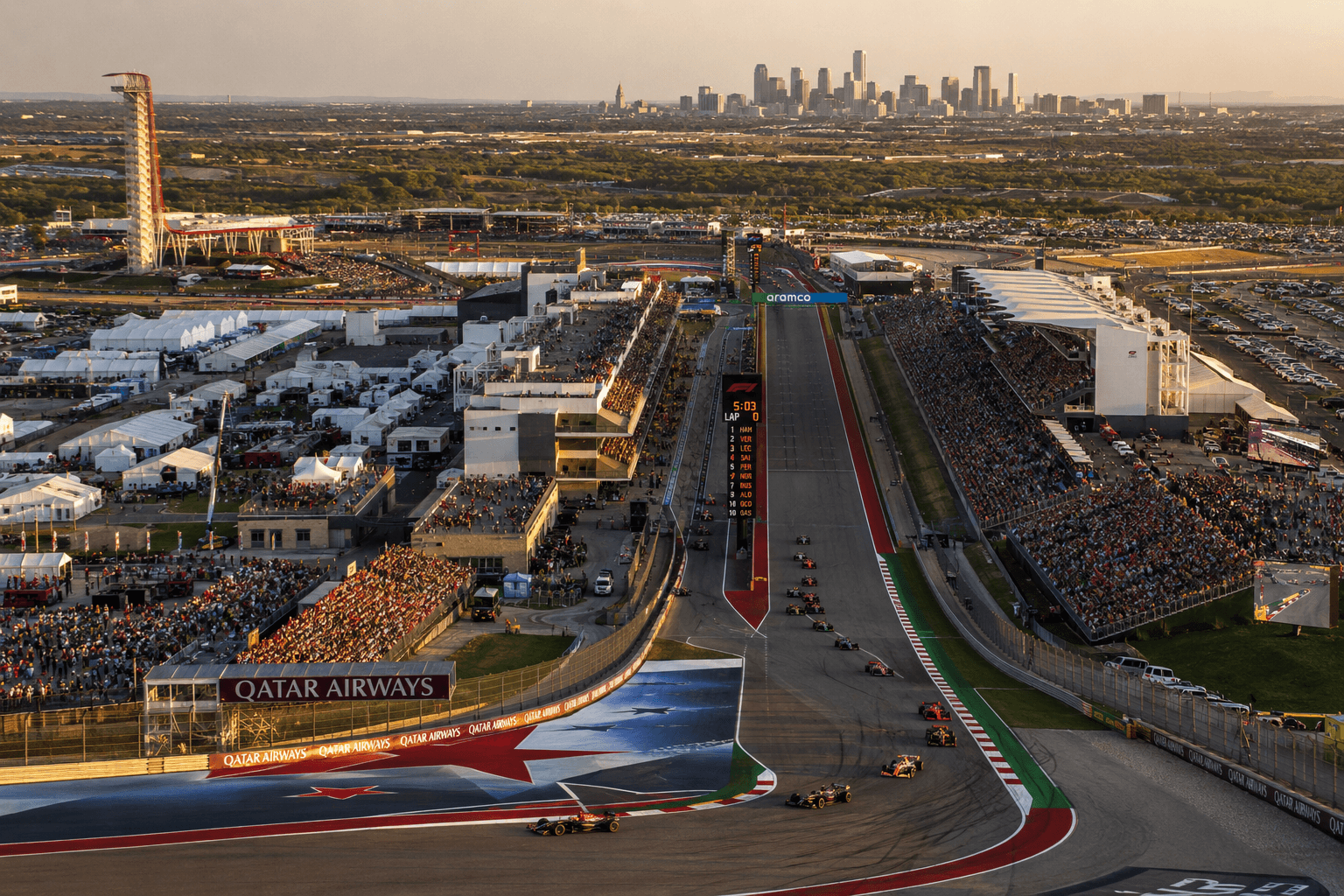
The United States Grand Prix at Circuit of the Americas isn't a single race — it's a three-day motorsport festival that transforms Austin into F1's most distinctive venue. While Monaco offers glamour and Monza delivers history, COTA combines world-class racing with a concert lineup that would headline music festivals. Understanding how to navigate this multi-day event determines whether you experience F1's full spectacle or spend half your weekend stuck in traffic.
The Three-Day Structure That Changes Your Strategy
Friday brings practice sessions where teams reveal setup choices and drivers learn the circuit's evolution. Saturday delivers qualifying — arguably the weekend's most dramatic two hours — followed by sprint races or additional practice depending on the calendar format. Sunday culminates with the Grand Prix itself, but treating it as the only day worth attending means missing crucial context.
Groups attending all three days face different logistics than those arriving Sunday morning. Your viewing strategy shifts between sessions: practice rewards mobility as you explore different grandstands, while qualifying demands you secure your position early at Turn 1 or Turn 12. The race itself requires balancing optimal viewing angles against proximity to post-race celebrations.
The circuit sits 20 miles southeast of downtown Austin — a distance that becomes significant when repeated daily. Friday afternoon traffic mixes local commuters with early arrivals. Saturday draws the weekend's most passionate fans. Sunday morning transforms every road leading to COTA into a slow-moving parade.
Transportation That Matches Multi-Day Attendance
Daily round trips from downtown Austin to the circuit require different thinking than single-day attendance. A Premium SUV works for a small group making one trip, but groups attending multiple days benefit from vehicles that accommodate gear, provide consistent pickup points, and eliminate daily coordination hassles.
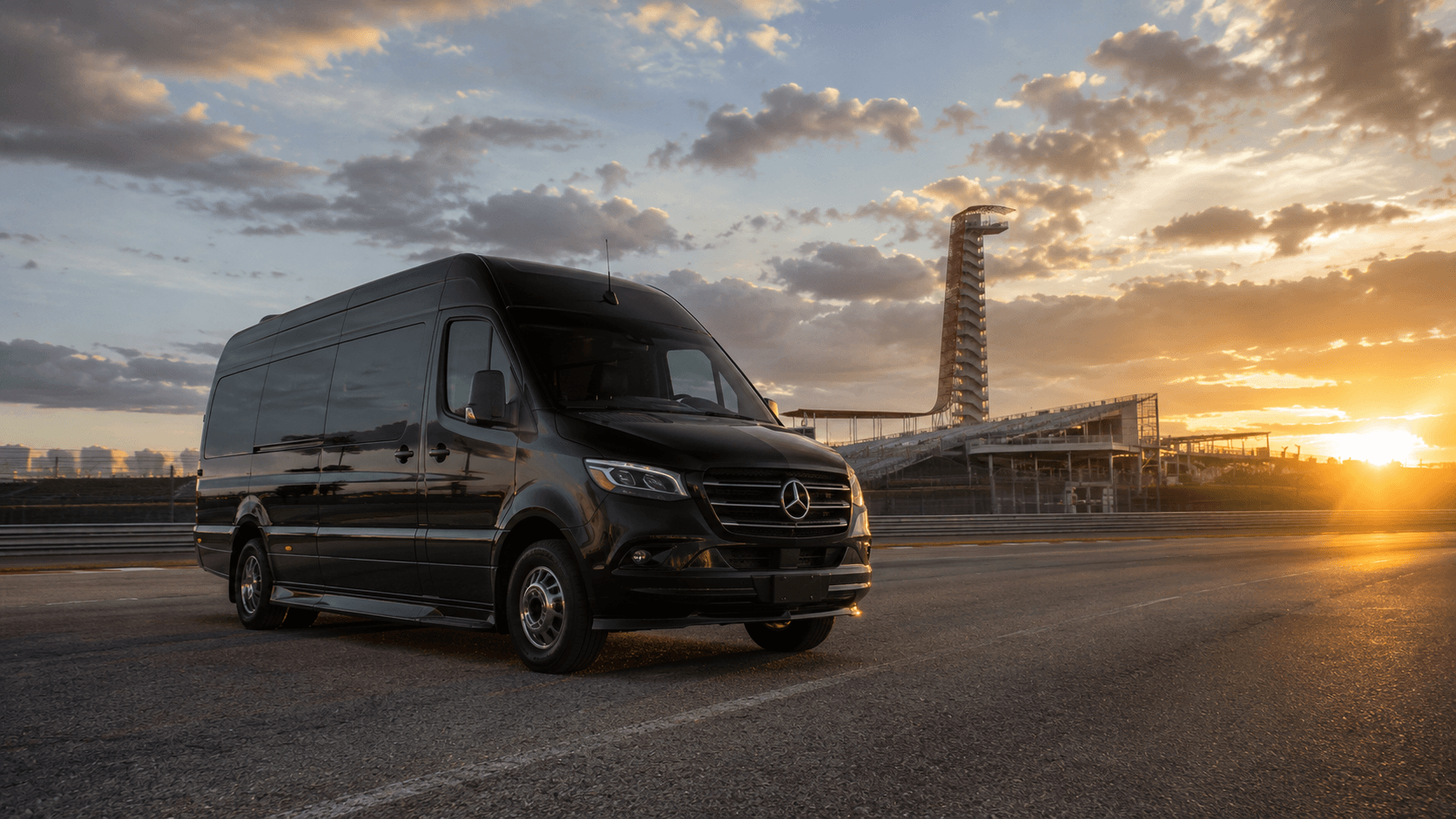
A Sprinter Van carrying up to 12 passengers establishes your group's consistent schedule across three days. You leave downtown together each morning, return together each evening, and never wonder whether someone will miss qualifying because rideshare drivers avoid COTA during peak hours. Your chauffeur learns preferred routes, adjusts timing based on session schedules, and coordinates with circuit access patterns that change between practice, qualifying, and race day. Vehicle availability varies by market.
Full-day chauffeur service for Saturday and Sunday addresses F1's unpredictable timing directly. Qualifying can run early if weather threatens or extend late when sessions get red-flagged. Race day builds from morning driver parades through post-race podium ceremonies that stretch into evening. Having your vehicle present throughout eliminates the anxiety of watching the clock when track action delivers unexpected drama.
International visitors often combine the Grand Prix with Austin exploration — mornings on South Congress, afternoons at COTA, evenings on Sixth Street. Hourly car service adapts to schedules that blend motorsport with the city's music scene and BBQ circuit without forcing you to choose between the two.
COTA Layout and Where to Actually Watch
Circuit of the Americas spans 3.4 miles with 20 turns, creating viewing challenges that differ from traditional European circuits. Turn 1's dramatic elevation change draws crowds, but limited sightlines mean you witness five seconds of action per lap. The esses through Turns 3–6 showcase driver skill but happen too quickly for casual fans to appreciate.
Turn 12 hairpin delivers overtaking attempts visible from multiple angles — you see braking zones and acceleration out of the turn, plus cars approaching through Turn 11. Turn 15 offers similar advantages: you watch cars set up for the final sector while monitoring timing screens showing gaps ahead.
General admission areas along the main straight let you feel F1's speed but provide little context for race strategy. You see cars flash past at 200 mph without understanding whether they're pushing for position or managing tires. The turn complexes tell the real story — where drivers gain or lose time, where championship battles get decided.
Groups splitting up during practice sessions gather intelligence that shapes race day positioning. Someone watches Turn 1 starts while others monitor Turn 12 overtaking. Reconvene between sessions, compare notes, then establish Sunday positions based on where racing actually happens rather than where crowds assume it does.
Concert Integration and Saturday Night Logistics
Saturday night's concert isn't an add-on — it's central to why the US Grand Prix draws non-racing fans who wouldn't attend most F1 venues. Recent years brought headliners performing full sets that would top standalone tours. This transforms COTA from a race circuit into an entertainment venue that justifies three-day attendance even for casual motorsport fans.
The concert happens after qualifying ends, typically starting around 7:30pm. Groups watching qualifying must decide whether to stay for music or return to Austin for downtown entertainment. Staying means roughly 12 hours at the circuit from morning sessions through evening performances. Leaving means missing one of the weekend's genuinely unique attractions.
Transportation timing around Saturday's concert requires coordination. If your group stays for music, you're leaving COTA around 10:30pm alongside 80,000 other attendees. Exit routes congest in ways that don't happen after Sunday's race, when crowds disperse more gradually. Some groups split the weekend — attending Friday and Saturday, then returning Sunday for the race while skipping the concert. Others treat the qualifying-concert combination as the weekend's peak. Your transportation should accommodate either approach without forcing everyone into identical schedules.

Managing Austin During F1 Weekend
The city's hospitality infrastructure gets overwhelmed. Hotels within 10 miles of COTA charge rates that triple normal pricing and sell out months ahead. Downtown properties fill with F1 teams, sponsors, and fans willing to commute. Sixth Street's bars and restaurants reach capacity by Thursday evening.
Restaurant reservations that you'd normally make same-day require two-week advance planning during race weekend. The BBQ joints that define Austin dining develop two-hour waits by midday Saturday.
Groups staying across different hotels face coordination challenges that single-location attendees avoid. One hotel on the north side, another downtown, a third near the airport — suddenly your 7:30am departure requires the first pickup at 6:45am with stops in between.
A central meeting point simplifies this. Everyone gets to one downtown location — a hotel lobby, a specific intersection — where your vehicle collects the group. This adds 15 minutes to morning preparation and saves 45 minutes of driving between scattered properties. For group transportation across a multi-hotel F1 group, that trade is obvious.
Making the Weekend Work for Your Group
Success at Austin's F1 weekend comes from treating it as a multi-day commitment rather than a single-race trip. Plan which sessions matter most — qualifying for racing purists, the concert for entertainment seekers, race day for casual fans. Coordinate transportation that accommodates different priorities without forcing everyone into identical schedules.
Book vehicles that handle the full weekend rather than arranging daily transportation separately. Establish consistent pickup times and locations that become routine by Sunday. Account for Austin's traffic patterns that shift between morning commutes and afternoon circuit access.
Bookinglane covers the full scope: airport transfers into Austin, multi-day group service to COTA, and hourly flexibility for the days you're mixing racing with city exploration. Upfront pricing, no surge fees, and a chauffeur who operates on your race weekend schedule. Confirm availability early — F1 weekend books out well ahead of the green flag.
John Doe