
Austin City Limits presents an unusual challenge for festival planning: two consecutive weekends with identical lineups. For serious music fans, this creates both opportunity and confusion. Weekend 1 or Weekend 2? Both weekends? The decision affects everything from hotel rates to crowd density to your transportation strategy.
Understanding how these weekends differ — beyond just the calendar dates — helps you plan smarter whether you're an Austin local, an out-of-town regular, or coordinating a group spread across both weekends.
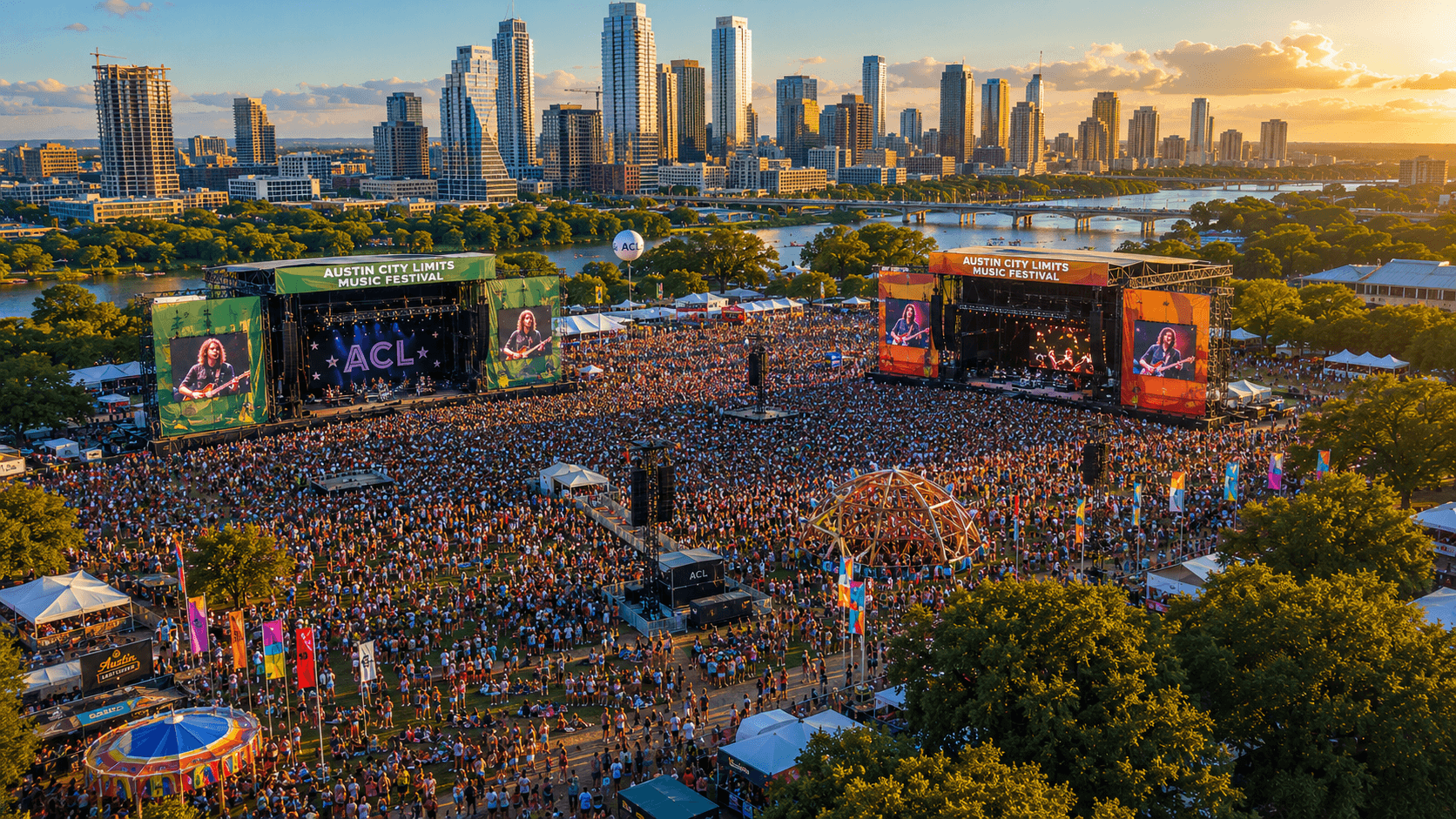
How Weekend 1 and Weekend 2 Actually Differ
The lineups match perfectly, but the festival experience doesn't. Weekend 1 draws the most eager crowds. This creates denser lines at headliners and popular mid-afternoon sets. Water refills and bathroom access slow down during peak times.
Weekend 2 typically runs smoother. The operations team has one weekend to identify bottlenecks and adjust — sound issues get fixed, stage schedules might shift five or ten minutes to prevent overlap problems discovered during Weekend 1, security lines move faster as staffing patterns improve.
Weather shifts between October weekends too. Weekend 1 faces higher temperatures on average, sometimes hitting 90°F by mid-afternoon. Weekend 2 usually brings cooler conditions as October progresses, though Austin's climate stays unpredictable. Rain chances increase slightly as fall weather systems become more active.
For groups comparing notes from previous years, Weekend 2 often wins. Slightly smaller crowds and operational improvements outweigh the fear of missing out on being there first.
The Case for Attending Both Weekends
Doing both weekends transforms ACL from a three-day festival into a week-long Austin experience. You catch sets you missed the first time. You revisit performances that exceeded expectations. You explore the city between festival days without the time pressure of a single trip.
For out-of-town attendees, transportation becomes the biggest logistical variable when attending both weekends. Airport transfers on arrival and departure days for both trips, plus festival access across six days, add up quickly if you're booking separately each time. Most serious multi-weekend attendees find it cleaner to arrange service that covers the full scope — festival runs, evening plans, and city exploration — rather than coordinating individual rides throughout.
The gap between weekends creates different strategies for locals versus visitors. Austin residents treat the middle week normally. Out-of-town fans staying continuously use those days to explore the music scene beyond Zilker Park — Sixth Street, Red River Cultural District — without festival pricing or crowds.

Making the Single-Weekend Decision
Most ACL attendees choose one weekend. Since lineups match, the decision rarely comes down to programming. Practical factors drive it.
Check group availability first. If three friends can only make Weekend 1 and two can only make Weekend 2, someone's experience gets compromised either way. Groups typically choose the weekend when the most important people can attend rather than splitting.
Hotel availability creates the next constraint. Weekend 1 books faster but prices stay relatively stable. Weekend 2 sometimes has better last-minute availability as hotels fill gaps after the initial rush.
Austin locals face a different calculation. No hotels, no flights. Weekend choice might depend on when out-of-town friends visit or which dates fit work schedules. Weather forecasts matter more when you can easily switch weekends until the last minute.
For single-weekend attendees, transportation planning is also simpler. Three festival days instead of six means one coordinated booking covers everything. A Sprinter Van service for a group of friends handles all three days without managing two separate logistics windows — up to 12 passengers, shared schedule, no one waiting on rideshare during peak exit times. Vehicle availability varies by market.
Austin Local vs. Out-of-Town Logistics
Austin residents have options out-of-town attendees don't. You can drive to Zilker Park if you're willing to park several blocks away and walk in October heat. You can use rideshare, though surge pricing hits hard during festival entry and exit windows. Or you can arrange dedicated transportation for your three days and eliminate both problems.
Out-of-town attendees face compressed timelines. Reliable airport transfers on arrival and departure days, consistent festival transportation that doesn't disappear when rideshare availability crashes at exit time, and evening options for exploring Austin beyond the festival grounds.
Full-day chauffeur service covers all of this without requiring separate bookings for each leg. Airport pickup, festival drop-offs, evening plans — one arrangement, one chauffeur who knows your schedule. The cost often compares favorably to multiple rideshare trips with surge pricing, and availability is guaranteed rather than variable.
Coordinating Split Groups Across Weekends
Some friend groups split across both weekends intentionally. Half attends Weekend 1, half attends Weekend 2, everyone compares notes afterward. This works when not everyone can commit to the same dates or when different people have Austin plans that only align with one weekend.
Transportation coordination gets more complex with split groups. The vehicle configuration that works for Weekend 1 may not match a smaller Weekend 2 group. Separate bookings rather than one comprehensive arrangement is usually the cleaner approach.
The upside: Weekend 1 attendees become scouts. Which stages had better sound, which food vendors had the shortest lines, which entrance gates moved fastest — that intel helps Weekend 2 attendees optimize their experience before they arrive.
The tradeoff is the shared experience. You're not at the same sets together. You can't leave as a group when everyone's ready to call it a night. For some groups that matters more than any logistical benefit.

Your Austin Exploration Window
Whether you stay between weekends or fly home and return, the gap week creates a different mode entirely. You're not making scheduled festival runs — you're moving around the city more spontaneously. Hourly car service works better here than fixed routes, since you control timing and destinations rather than working around festival entry windows.
For groups staying continuously, those non-festival days often become the trip's highlight. Austin in October without the Zilker Park crowds is a different city. Venues, restaurants, and neighborhoods that are impossible to reach during festival weekends open up. Some people deliberately under-schedule these days and let the city dictate the plan.
If you fly home between weekends and return for Weekend 2, your transportation needs split into two clean windows — airport transfers and festival service for each trip — rather than continuous coordination across ten days.
Booking Around Your Weekend Choice
Your weekend decision determines your transportation scope. Single-weekend attendees can arrange dedicated three-day service and be done. Two-weekend attendees need to decide early whether they're staying continuously or splitting into two separate trips, since that changes everything from vehicle selection to booking structure.
Either way, the festival stays remarkable. The sets match, the venue stays consistent, and Austin in October delivers. Your group transportation just needs to match whichever weekend — or weekends — you're actually attending. Confirm availability with Bookinglane early, particularly for Weekend 1 when demand concentrates.
John Doe