
The itinerary looks manageable. Twelve people, one airport, one Midtown hotel. The problem is that twelve people rarely land on one flight. They come in from New York, Chicago, Los Angeles, and Dallas across a five-hour window — different terminals, different baggage claim carousels, different exit times — and they all need to be at the Four Seasons by 6 PM for the executive dinner that starts the conference week.
A Sprinter Van parked at ATL for five hours isn't a plan. Neither is twelve separate rideshare bookings that may or may not converge at the right hotel entrance at anything like the right time.
ATL's Terminal Structure and Why It Complicates Group Logistics
Hartsfield-Jackson has one domestic terminal with multiple concourses running along a central spine, plus a separate International Terminal on the south end of the complex. The domestic concourses — A through F — are accessible from a single baggage claim level, but the walk time between concourses varies significantly, and the people mover connecting the satellite concourses to the domestic terminal adds time that groups don't account for.
For a corporate team arriving on separate flights, the relevant variable is which concourse each person exits from and how much baggage claim time their flight requires. A Delta flight from JFK arriving at Concourse B clears baggage claim 15 minutes after landing. An American flight from LAX arriving at Concourse D takes longer. An international arrival from London processing through the International Terminal adds 45 to 60 minutes beyond wheels-down for customs.
Managing these differences as separate point-to-point bookings creates an accountability problem. If the Los Angeles contingent's flight delays by 45 minutes, who is communicating that to the vehicle waiting at the domestic terminal? If the international arrival takes longer than expected through customs, does the pickup vehicle know to hold? Without a coordinated fleet, each individual traveler is managing their own transfer — which is fine until something goes off-schedule, and something always goes off-schedule.
A professional group transportation provider operating multiple vehicles has a single point of contact managing flight status across all arrivals. One call updates the fleet.
Fleet Assignment Logic: Arrival Clusters, Not Headcount
The instinct for a twelve-person corporate arrival is to assign one large vehicle. That works when twelve people land on the same flight. It doesn't work when they're spread across four flights over five hours.
The right framework is arrival cluster assignment — grouping travelers by flight timing and terminal, then matching each cluster to the appropriate vehicle.
Three executives arriving on the same Delta flight from New York within a 20-minute window are a natural cluster. A Premium SUV meets them at baggage claim, handles their luggage, and delivers to the Four Seasons in one clean transfer. Two travelers arriving from Chicago 90 minutes later are a sedan or small SUV run. The Los Angeles pair, arriving in the late afternoon, get their own vehicle timed to their actual terminal exit. The international arrival from London — whose customs timing is the least predictable — gets a vehicle with confirmed flight tracking and a driver briefed to hold for the actual exit time.
The hotel becomes the consolidation point. Each cluster delivers to the Four Seasons as they arrive. By the time the last flight clears, the early arrivals have checked in, the group has begun assembling, and the 6 PM dinner starts with everyone present — not waiting for the last two people to clear customs.
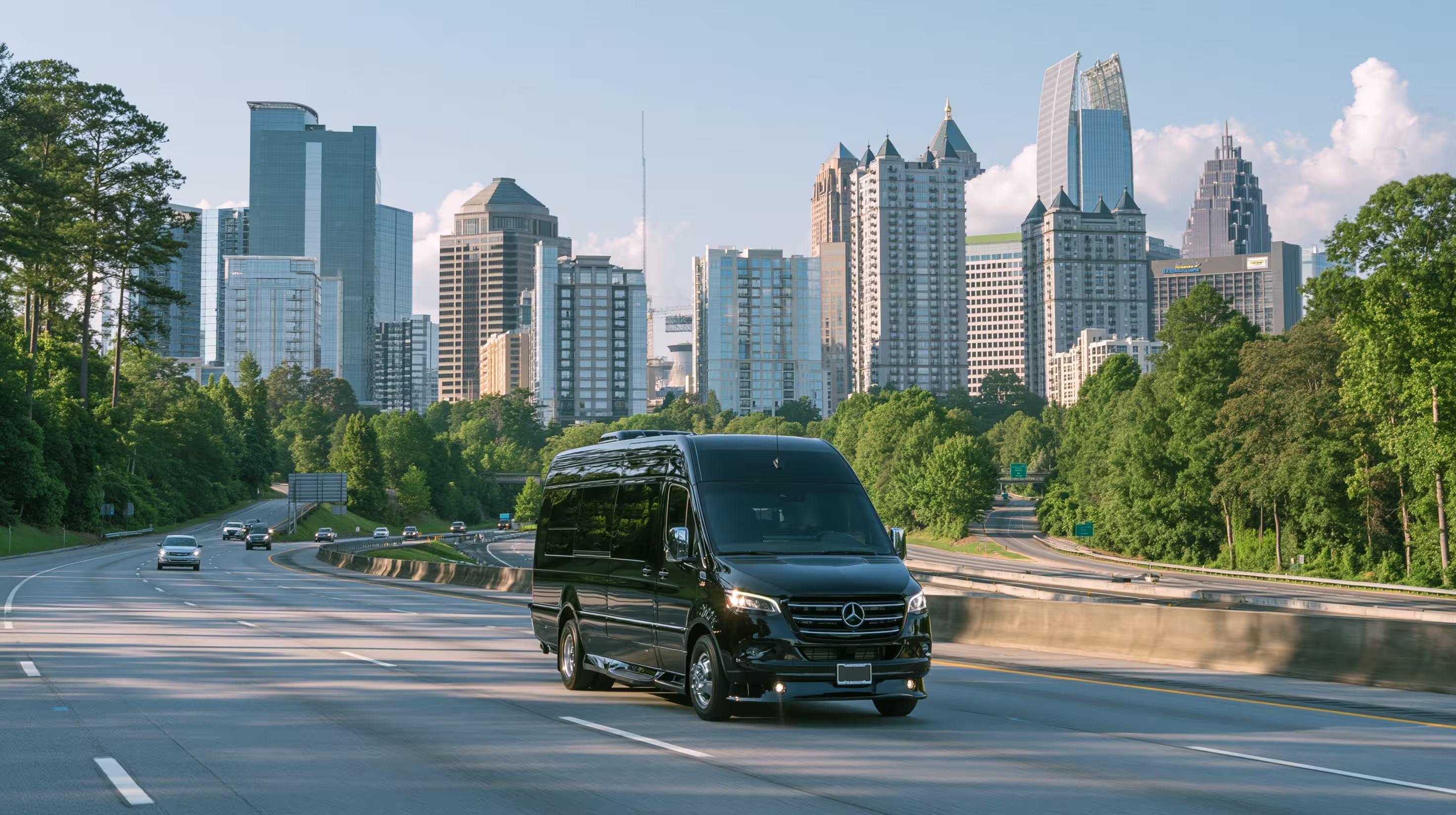
A Sprinter Van earns its place when four or more travelers land in the same window and can be combined into one pickup. It eliminates multiple sedan runs for the largest cluster, keeps the group together from the airport, and delivers them as a unit to the hotel — a cleaner arrival for the first impression of a corporate gathering.

The Midtown Assembly Point: Why Hotel Staging Works
The alternative to the hotel-as-consolidation-point model is the simultaneous airport assembly — holding everyone at ATL until the last flight lands, then moving the full group together. In theory, it's coordinated. In practice, it means the first arrivals wait at the airport for several hours, the last arrivals feel pressure to rush through baggage claim, and the group arrives at the hotel collectively depleted rather than progressively refreshed.
The hotel model is more forgiving of the variables that actual travel produces. Early arrivals check in, freshen up, and are ready when the group assembles. The 6 PM dinner begins with twelve people who have had different amounts of decompression time — which is fine, because each arrival was handled individually and nobody waited at a baggage carousel for two hours.
The Four Seasons Atlanta on 14th Street accommodates sequential arrivals without logistical strain. The bell staff handles luggage for each incoming vehicle; the front desk processes check-ins continuously; the group assembles in the lobby or a pre-arranged meeting space as each cluster arrives. The coordination has already happened in the flight manifest and the vehicle assignment — not at the airport curb.
Georgia World Congress Center and Conference Week Demand
The Georgia World Congress Center is one of the largest convention facilities in the United States, and a major GWCC conference concentrates thousands of attendees into Atlanta's Midtown and downtown hotel corridor across a compressed window. Every corporate travel coordinator booking a group from ATL to Midtown during a major GWCC event week is competing for the same fleet capacity.
The demand pattern is predictable and recurring. Large medical, technology, and industry conferences at the GWCC fill Atlanta's hotel inventory weeks in advance. Transportation demand follows the same curve — Sprinter Vans and coordinated fleet assignments for the opening day of a major conference are committed well before the event date.
Beyond the GWCC, Atlanta's convention and entertainment calendar generates recurring peaks: SEC Championship weekend, Dragon Con, major concerts at State Farm Arena. Any of these events can significantly affect the ATL to Midtown corridor's traffic and vehicle availability simultaneously.
Due to traffic restrictions and elevated demand during major events, a minimum hourly booking requirement may apply. Minimums vary by event, vehicle class, and city — confirming availability and minimum requirements for any group arrival tied to a GWCC conference or Atlanta event week is the correct first step. The vehicle booking should happen at the same time as the hotel block reservation, not after the conference agenda is distributed.
Building the Logistics Brief
The coordination problem for a multi-flight corporate group arrival resolves into a straightforward brief when the right information is assembled in advance.
The flight manifest needs to include every traveler's airline, flight number, scheduled arrival time, terminal or concourse if known, and whether the arrival is domestic or international. The luggage configuration — whether travelers have checked bags, carry-ons only, or equipment cases — determines vehicle class for each cluster. The hotel address, the check-in contact name, and the dinner start time set the delivery deadline that the vehicle timing works backward from.
VIP designation matters here in a specific way. If the CEO or a key client is on one of the flights, that vehicle assignment gets priority treatment — a First Class vehicle, confirmed driver identity shared with the executive assistant, pickup timing confirmed against the actual flight rather than the schedule. The other clusters can operate on standard premium sedan or SUV assignment without that level of confirmation protocol.
For the full vehicle options, fleet coordination details, and booking information on the ATL to Four Seasons Midtown corridor, the airport transfer page and the ATL to Four Seasons route cover the individual and group options across all vehicle classes.
John Doe