
PGA Championship at Aronimink: Transportation Strategy for the Philadelphia Major
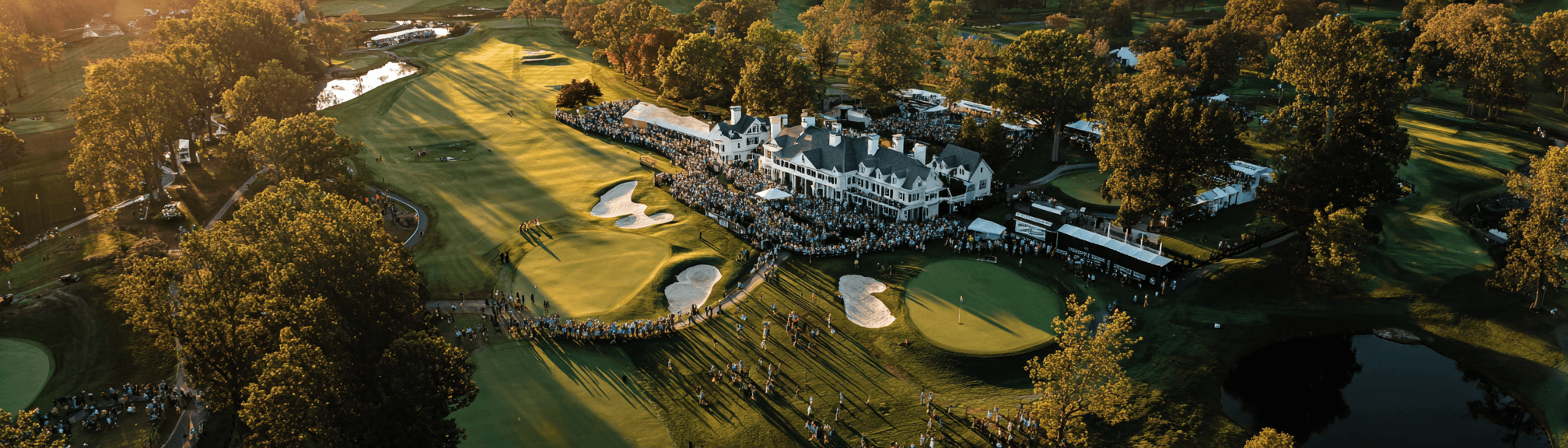
When a major championship returns to the Philadelphia area, it's more than a tournament—it's a chance to experience one of golf's most architecturally significant venues in competition conditions you'll wait years to see again. Aronimink Golf Club in Newtown Square represents the kind of major venue where course knowledge matters as much as player knowledge, and where transportation planning directly impacts how much of the championship experience you actually capture.
The Aronimink location presents a specific challenge that distinguishes it from urban major venues. You're not dealing with downtown hotel proximity or public transit options. You're navigating suburban Delaware County, where the course sits roughly 20 miles west of Center City Philadelphia, in a residential area without the infrastructure of a Bethpage or a Torrey Pines. That geography shapes everything about your week.
Understanding Aronimink's Suburban Context
Newtown Square isn't designed for major championship crowds. The surrounding roads—West Chester Pike, Darlington Road, the immediate residential streets—handle daily suburban traffic, not 40,000 spectators converging on a single point. The PGA of America implements traffic management, but the fundamental constraint remains: this is a neighborhood course without the natural flow patterns of venues built near highway interchanges or mass transit.
From Center City Philadelphia, you're looking at 35-45 minutes in normal conditions. During championship rounds, particularly weekend play, that window extends. Tournament organizers typically establish parking areas away from the course with shuttle systems, but those shuttles add layers to your timeline. If you're planning to arrive for featured group tee times or position yourself at specific holes for architecture viewing, you need buffer time measured in hours, not minutes.
The Philadelphia International Airport sits southeast of the city, roughly 30 miles from Aronimink. That airport-to-course routing takes you through or around the city depending on time of day. If you're flying in specifically for the championship, your transportation strategy starts at baggage claim, not at your hotel.
Multi-Day Viewing Strategy and Vehicle Implications
Serious golf fans don't attend one round. You're there Tuesday for practice rounds when you can follow specific players and observe course setup without crowds. You're there Thursday or Friday for opening rounds when scoring patterns emerge. You're there weekend when the championship identity reveals itself. That's three or four days of Newtown Square navigation, each with different timing requirements.
Practice round days allow flexibility. You can arrive mid-morning, spend hours walking the course, studying Donald Ross's architecture in championship trim. But championship rounds demand precision. If you want to see featured groups, you're positioning yourself well before the first tee time. If you're planning to watch from specific holes—the par-3 3rd with its severe green, the strategic par-5 16th—you're timing arrival to secure those positions.
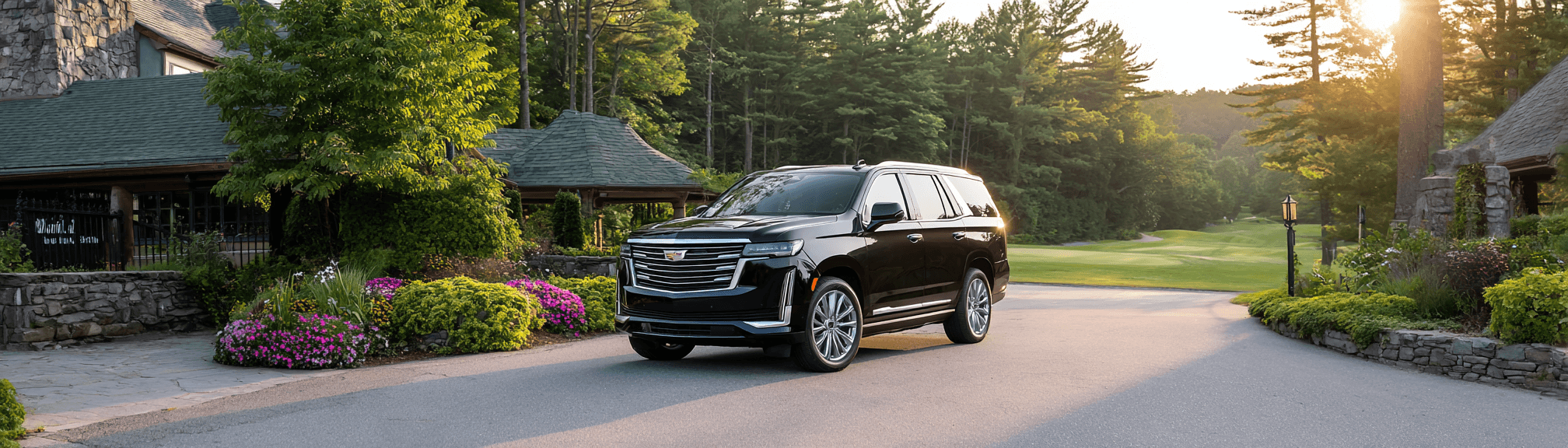
An SUV handles this multi-day pattern efficiently for two to four people. You have space for folding chairs, rain gear, layers for variable weather, cameras and binoculars. You're not carrying everything through shuttle systems. You control departure timing based on play flow rather than shuttle schedules. If Friday's round runs late due to weather and you want to stay for completion, you're not locked to predetermined shuttle windows.
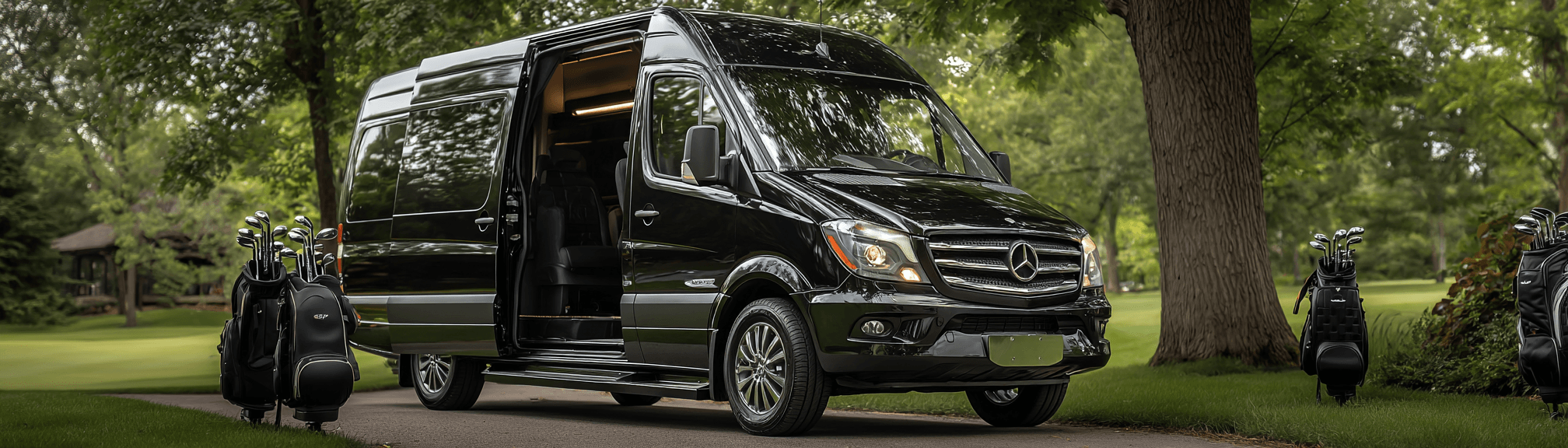
For larger groups—six to eight people traveling together for the full week—a Sprinter Van changes the logistics entirely. You're moving as a unit, coordinating which holes to watch, which players to follow, where to position for optimal viewing angles. The van becomes a mobile base, allowing the group to stay together or split as strategy dictates, then reconvene.
Philadelphia Area Access and Regional Coordination
The Aronimink championship creates opportunities beyond the course itself. Philadelphia's golf culture runs deep—Merion, Pine Valley (if you have access), Philadelphia Cricket Club, the Ross courses scattered through the Main Line suburbs. Serious architecture enthusiasts often build a broader golf experience around the major week.
That regional approach requires different vehicle thinking. You're not just doing the airport-hotel-course triangle. You're potentially routing to Ardmore for Merion, to Bala Cynwyd for Philadelphia Country Club, coordinating tee times or touring arrangements that require precise scheduling. Full Day Service with a professional driver who knows Delaware and Montgomery County roads transforms this from stressful navigation to coordinated execution.
The driver becomes your local routing expert. They know which approaches to Aronimink avoid residential bottlenecks. They understand Main Line geography well enough to optimize multiple-course days.
Championship Week Timing Patterns
Major championship weeks follow predictable rhythms that affect transportation decisions. Monday and Tuesday practice rounds draw smaller crowds—serious fans, media, players working through course strategy. Wednesday brings the pro-am and increased attendance. Thursday and Friday championship rounds represent the week's heaviest traffic volume, with full fields and maximum spectator presence. Weekend rounds thin slightly as cuts eliminate half the field, but crowd intensity increases as the championship resolves.
Your transportation approach should match these patterns. Early week, you might use standard car service for airport pickup and daily course runs. Mid-week, as crowds build and your viewing schedule becomes more demanding, you might shift to dedicated vehicle service that eliminates wait times and parking uncertainty. Weekend, when positioning at key holes becomes competitive and weather delays are most disruptive, having controlled transportation removes variables you can't afford during the championship's climax.
The hourly service model works particularly well for championship rounds. You're not locked to rigid pickup times. If morning pairings are delayed an hour due to fog, your driver adjusts. If you want to stay through the final putt on Sunday regardless of when that occurs, you're not watching the clock. The flexibility matches the unpredictable nature of championship golf.
Aronimink Viewing Strategy and Vehicle Coordination
Understanding Donald Ross's architecture helps you plan which holes deserve extended viewing time. The 3rd hole, a short par-3 with a severely contoured green, creates decisive moments all week. The long par-3 8th tests club selection and nerve. The par-5 16th often determines Sunday outcomes based on risk-reward decisions.
If your group includes multiple people with different viewing preferences—some want to follow specific players, others prefer to camp at strategic holes—vehicle coordination becomes essential. The Sprinter Van allows the group to arrive together, split for four to five hours of independent viewing, then reconvene for departure. You're not coordinating ride-share pickups or managing separate rental car logistics.
For those incorporating other regional courses into their week, the transportation strategy needs to account for golf rounds elsewhere. If you're playing Gulph Mills in the morning before heading to Aronimink for afternoon championship golf, your vehicle choice affects what time you need to leave your course, how you handle golf clubs and tournament viewing gear, and whether you can manage the transition comfortably.
Weather Contingency and Major Championship Realities
Pennsylvania weather in May (typical PGA Championship timing) brings unpredictability. Morning fog delays, afternoon thunderstorms, cool temperatures requiring layers. Your transportation plan needs to absorb these disruptions without adding stress.
Having a dedicated vehicle means you're not stranded at the course during weather delays. You can retreat to the vehicle, stay dry, make real-time decisions about whether to wait out the delay or leave and return. You can adjust your schedule based on actual conditions rather than pre-planned shuttle times.
The major championship experience you're traveling for—watching the world's best players navigate a course specifically prepared to test every aspect of their game—requires the kind of focused attention that transportation uncertainty disrupts. When you've invested in the trip, arranged your schedule around the championship week, and committed to experiencing Aronimink in major condition, the transportation layer should enhance that experience rather than complicate it.
Making the Most of Philadelphia's Major Return
Major championships come to the Philadelphia area infrequently enough that each one carries weight. When you're planning to attend multiple days, coordinate viewing with other golf fans, potentially explore the region's other significant courses, and experience a venue like Aronimink in championship condition, transportation becomes the framework that either enables or limits that experience.
The choice between managing individual logistics and having professional transportation support comes down to what you want to spend mental energy on during major week. Do you want to think about parking, shuttle timing, traffic routing, and vehicle coordination? Or do you want to think about where to position yourself on the 16th hole, which players to follow during Friday's round, and how Ross's architecture influences championship strategy?
Professional ground transportation for golf's major championships isn't about luxury—it's about removing the variables that distract from the experience you traveled for. When the PGA Championship returns to Aronimink, and you're planning the comprehensive viewing approach that serious golf fans build around major weeks, the transportation strategy you choose shapes how much of that championship experience you actually capture.
John Doe


